If you have the flexibility to choose, the best time to pour concrete in Pueblo is late spring or early fall — the mild stretches when days are warm, nights stay above freezing, and the concrete can cure slowly into its full strength. May, September, and October are about as good as it gets in Southern Colorado.
That said, weather rarely lines up perfectly with when you actually need the work done. The truth is we pour year-round in Pueblo, and a good crew adjusts to the season instead of fighting it. Here's how heat, cold, and curing temperatures affect a pour — and how to time your project for the strongest result.
Why temperature matters so much for concrete
Concrete doesn't dry out — it cures. Curing is a chemical reaction called hydration, where cement and water bond and harden over time. That reaction is picky about temperature. In a comfortable range, roughly 50 to 85 degrees, hydration moves at a steady pace and the concrete develops dense, durable strength. Too hot and it cures too fast, which invites cracking. Too cold and the reaction stalls, leaving weak, chalky concrete that never reaches its rated strength.
Get the temperature right and you get concrete that holds up to decades of Pueblo freeze-thaw. Get it wrong and you can compromise a slab before it ever cures. That is why timing is more than a scheduling question.
The sweet spot: late spring and early fall
Late spring and early fall hit the range concrete loves. Daytime highs in the 60s and 70s let the slab cure at a measured pace, and overnight lows generally stay above freezing so the fresh concrete is never at risk. There's usually less of the blistering afternoon sun and drying wind we get at the height of summer, which means fewer surface problems.
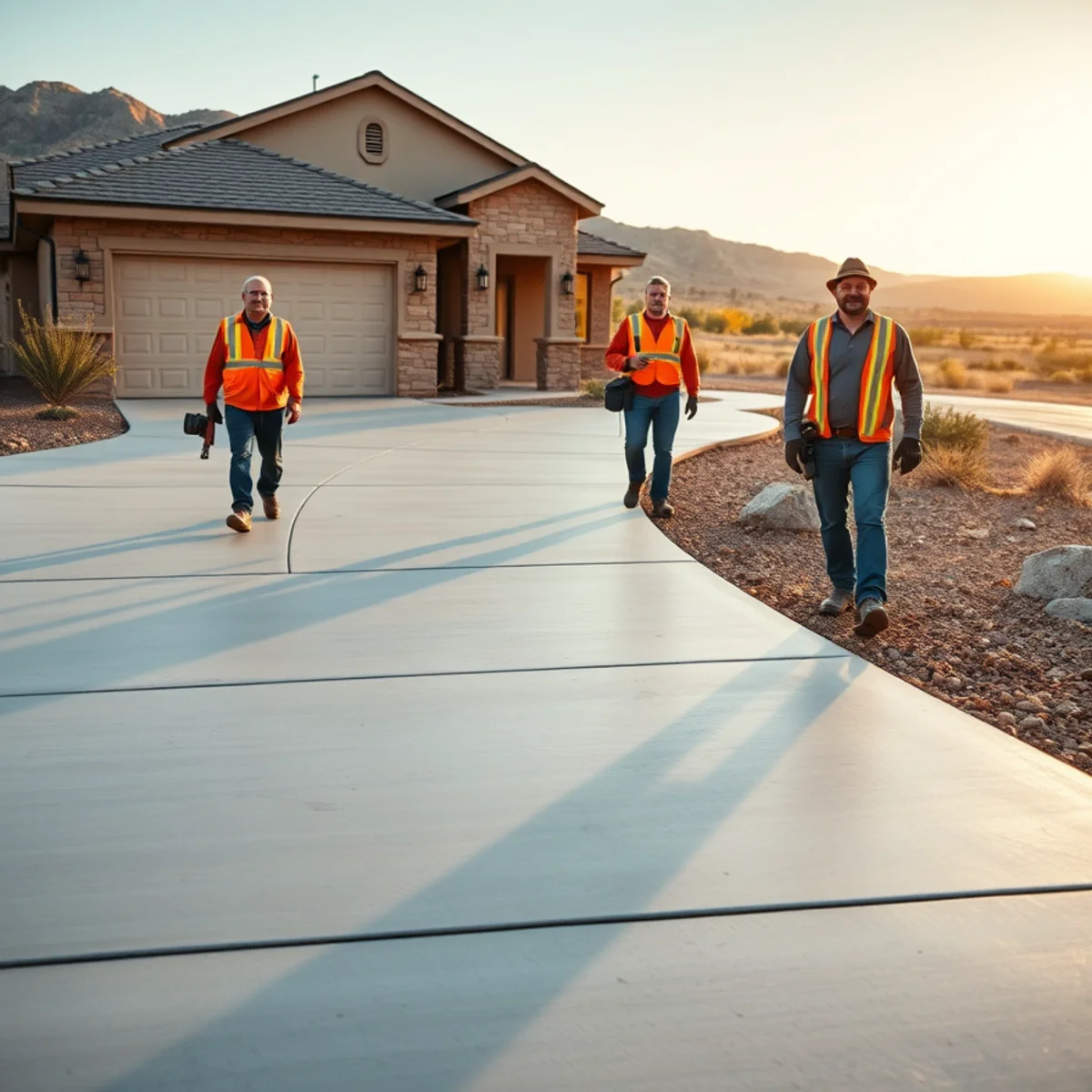
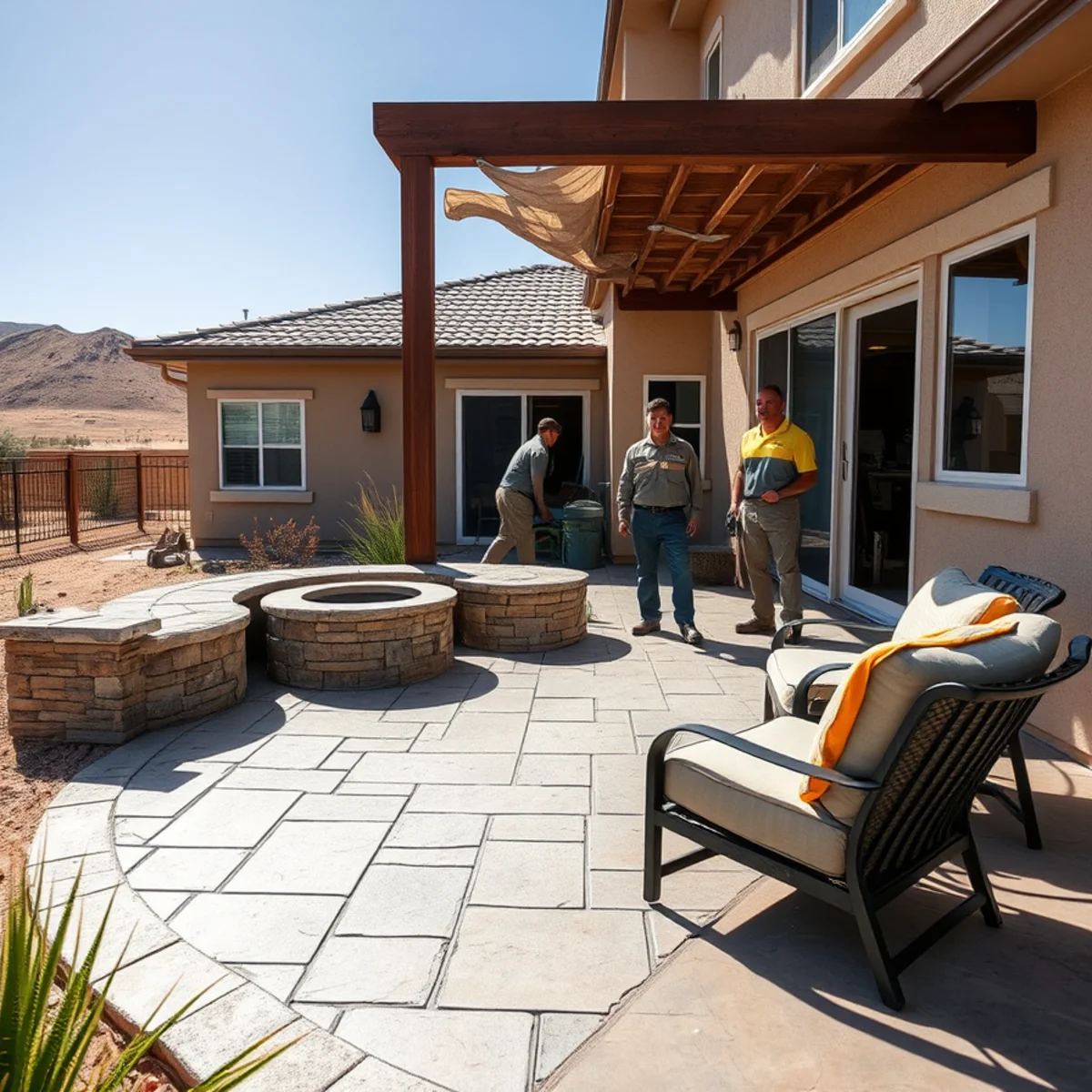
These windows are ideal for concrete driveways, patios, and foundations alike. The one catch is demand — every homeowner and builder in the area wants those same weeks, so calendars fill quickly. If you're planning a spring or fall project, it pays to book the estimate early.
Pouring in a Pueblo summer
Summer pours are common and turn out great — but hot weather demands respect. Pueblo sits at high desert elevation with more than 300 days of sun and low humidity, so on a hot, breezy afternoon the surface water can evaporate faster than the concrete can use it. That leads to plastic shrinkage cracking, where fine cracks open across the surface while the slab is still setting.
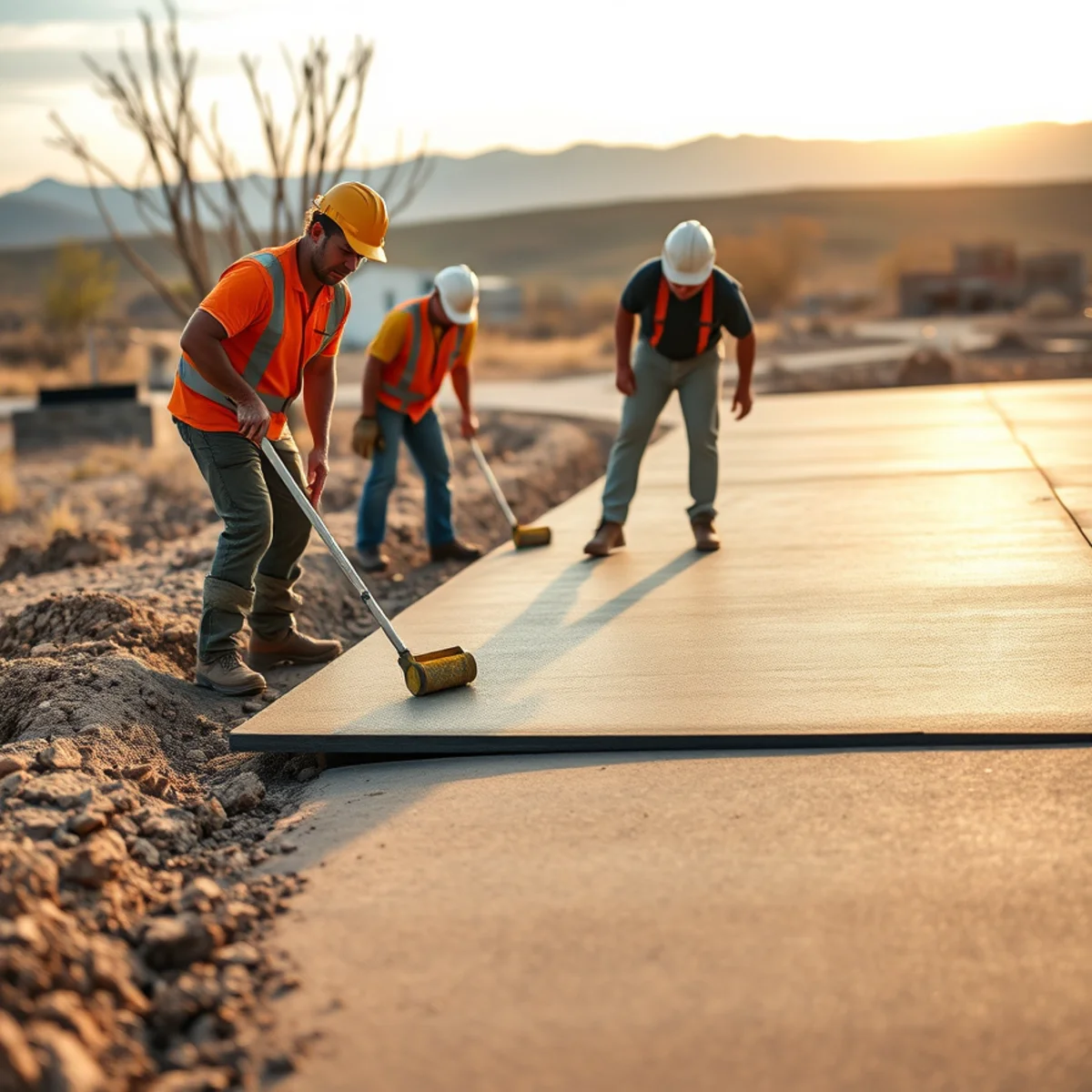
The fix is technique, not avoidance. On hot days we schedule pours for early morning, use cooler mix water, apply an evaporation retarder to slow moisture loss, and start curing the moment the finish is done. Done right, a July slab is every bit as strong as an October one.
Summer pour tip
Cold-weather concrete: pouring in winter
We pour in winter when a project calls for it, but the margin for error shrinks. The single biggest risk is fresh concrete freezing before it has gained enough strength. If the water inside a young slab freezes, it expands and permanently weakens the concrete — often ruining it. Concrete needs to reach a minimum strength before it can safely take a hard freeze.
Cold-weather pours rely on a set of proven practices: we never place concrete on frozen or icy ground, we use heated mix water and non-chloride accelerators to speed the early set, and we protect the fresh slab with insulated blankets or heated enclosures to hold in the heat of hydration. It costs more and takes longer, but it produces sound concrete even in December.
Never let a fresh pour freeze
What about early spring and mud season?
Early spring can be deceiving. The air feels warm, but the ground may still be frozen or saturated from snowmelt, which makes it hard to build the compacted base that a lasting slab depends on. Foundation and slab work especially benefit from waiting until the ground firms up. Sometimes the best move in March is a few weeks of patience.
Curing temperatures and the 7-day rule
The pour is only the start — curing is where strength is made. We aim to keep new concrete above 50 degrees and consistently moist for the first seven days, the stretch when it gains the bulk of its strength. Concrete keeps hardening for about 28 days to reach its full rated strength, which is why we ask you to keep vehicles off a new driveway for at least a week. You can usually walk on it after 24 hours.
So when should you schedule your project?
If your timeline is flexible, aim for May and June or September and October, and book the estimate a few weeks ahead so you land a spot in the window. If your project can't wait, don't worry — we pour through the heat of summer and the cold of winter using the right practices for the season. From established neighborhoods in Pueblo to the newer builds out in Pueblo West, we'll help you pick a timeline that fits both your schedule and the concrete.
The best time to pour is the season that matches your project and gets it done right — and there's a smart way to pour in every one of them. Tell us what you're planning and we'll walk you through the ideal timing. Estimates are always free, we offer a 10% veteran discount, and there's never any pressure. Call (833) 334-0468 to schedule your free on-site estimate.
Frequently asked questions
Written by M.A.M. Concrete
A locally owned concrete contractor pouring driveways, patios, and foundations across Pueblo County & Southern Colorado. We write what we know from the job site.
Services mentioned in this article
Concrete Driveways
New driveways, replacements, and widening — poured with a 4,000 PSI air-entrained mix built for Pueblo freeze-thaw.
Learn moreConcrete Patios
Broom, stamped, or exposed-aggregate patios poured for Pueblo's sun and freeze-thaw — with drainage that protects your home.
Learn moreConcrete Foundations
Slab-on-grade, stem-wall & footing foundations engineered for Pueblo County's expansive clay soils and built to stay level.
Learn more