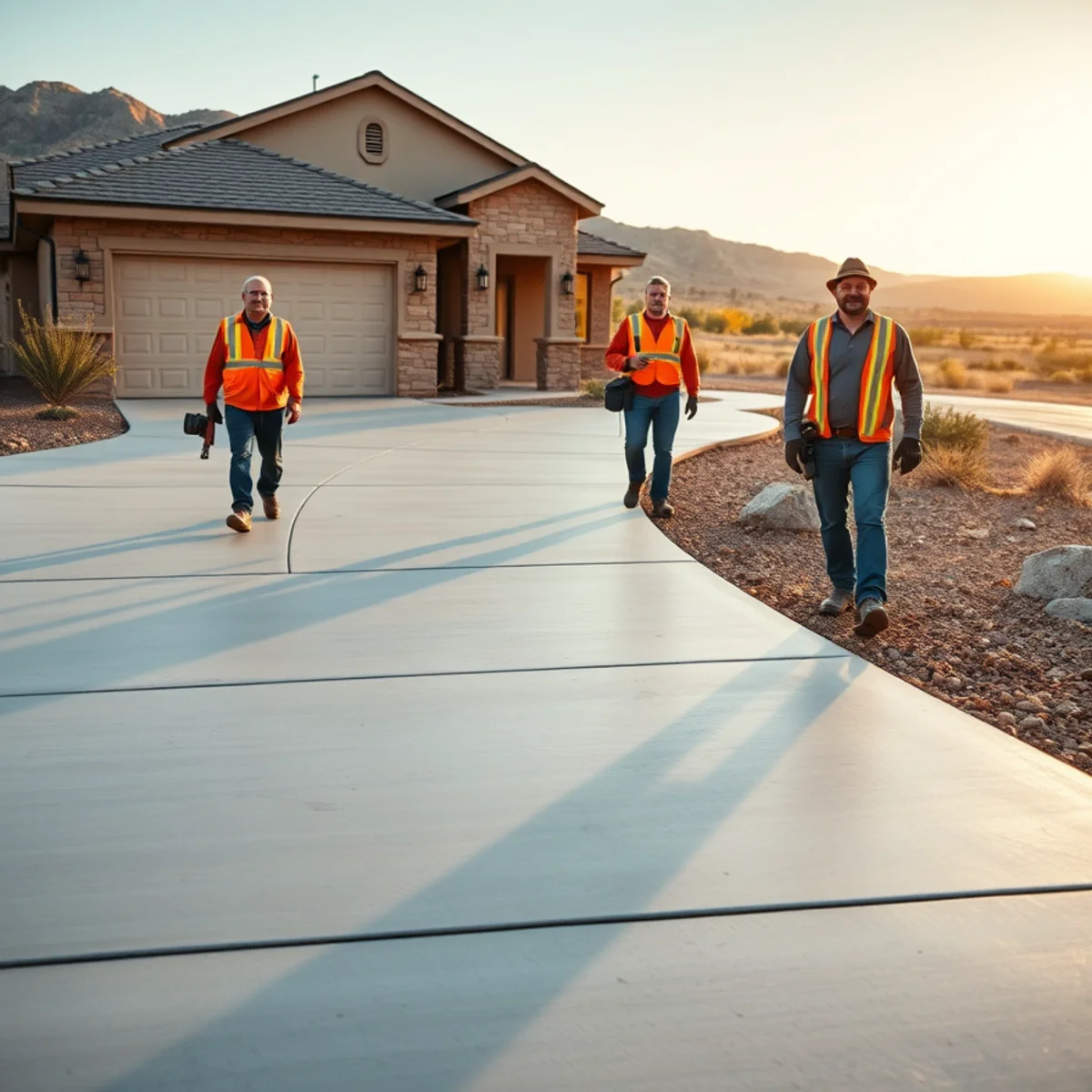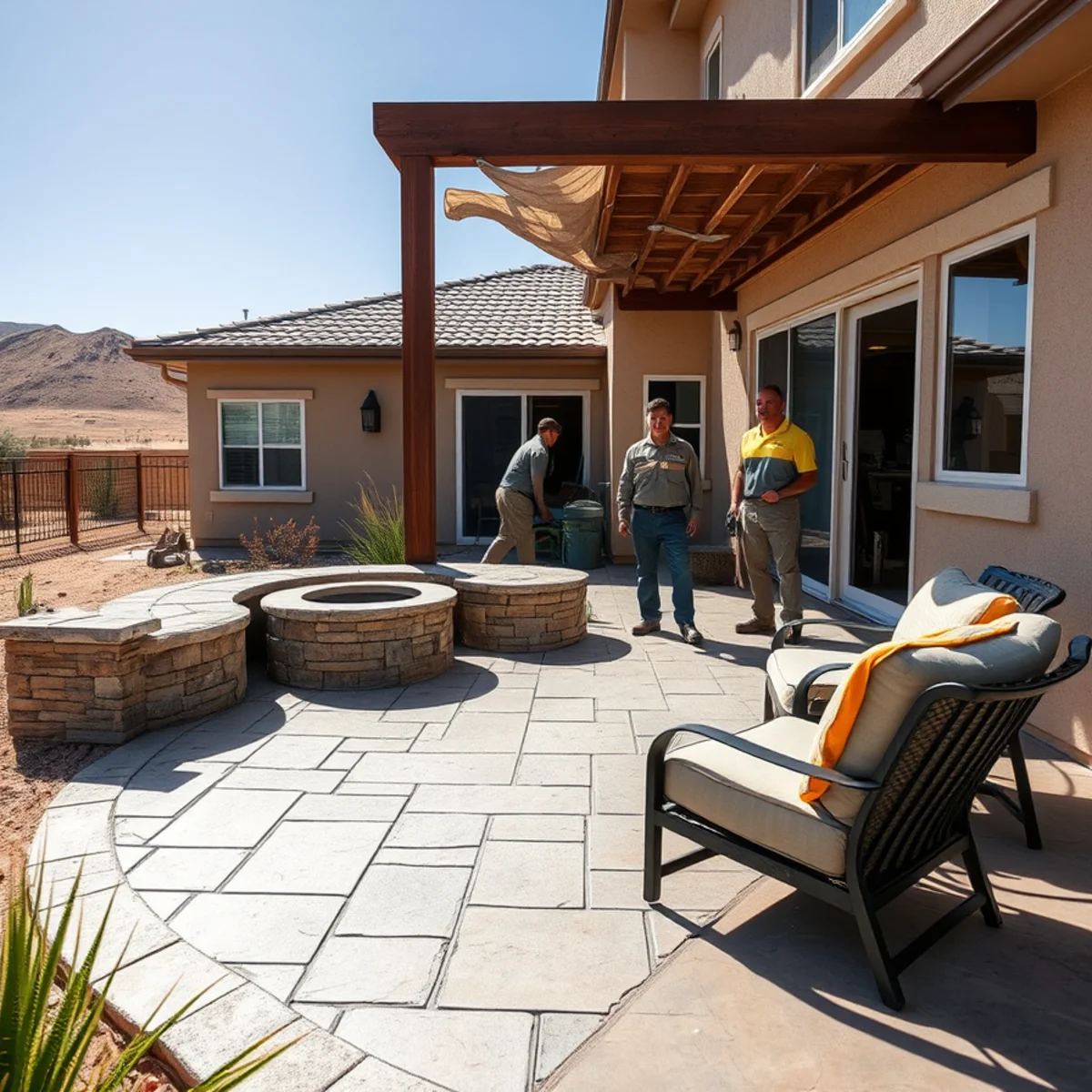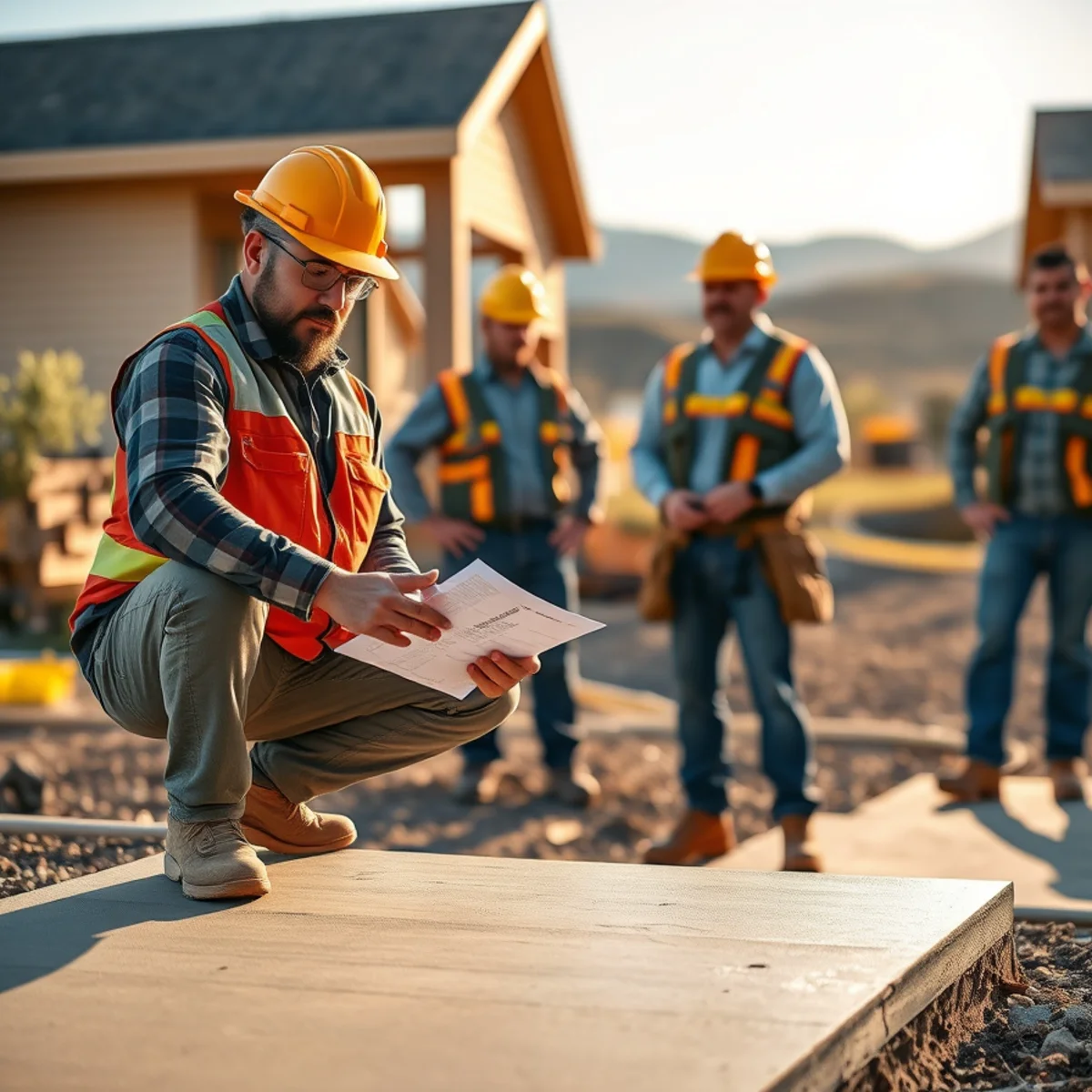
A concrete slab looks like the simplest thing we pour — a flat rectangle of gray. But the price per square foot swings more than people expect, because a shed floor and a slab that carries a hot tub or an RV are not the same animal underneath. Thickness, reinforcement, and base prep are where the real cost lives.
This guide gives current 2026 ranges for concrete slabs in Colorado, then explains what pushes a slab to the top or bottom of those ranges. Whether you are pouring a pad for a storage shed, a garage floor, an RV parking spot, or a hot tub, you will know what to budget before you call.
Concrete slab cost per square foot
Utility slabs are priced by the square foot, installed, and the figure covers grading, a compacted base, forming, reinforcement, concrete, and finishing. Here is where slabs generally land in Colorado:
| Slab type | Cost per sq ft | Typical thickness |
|---|---|---|
| Shed / utility pad | $6–$9 | 4 inches |
| Garage floor slab | $7–$10 | 4 inches, reinforced |
| RV / heavy-vehicle pad | $8–$12 | 5–6 inches |
| Hot-tub pad | $9–$14 | Thickened, extra rebar |
These are general ranges for planning — your exact price is confirmed on a free on-site estimate. Small pads often carry a higher per-foot cost because mobilization, forming, and finishing do not scale down with the slab.
What common slabs cost as a project
Per-foot pricing is useful, but most people want the whole number. Here are ballpark totals for the slabs we pour most often:
| Slab | Typical size | Estimated total |
|---|---|---|
| Storage shed pad | 120 sq ft (10x12) | $1,000–$2,000 |
| Two-car garage floor | 400 sq ft (20x20) | $3,000–$5,000 |
| RV / boat pad | 300 sq ft (12x25) | $2,500–$4,500 |
| Hot-tub pad | 64 sq ft (8x8) | $700–$1,500 |
If the slab is the floor of a structure you plan to heat, live in, or build on, it moves out of utility territory and into foundation work. Our concrete slabs service page covers the flatwork side; for a load-bearing base under a home or addition, see concrete foundations.
How thick should your slab be?
Thickness is the first thing that moves your price, and it is set by the load the slab will carry. Get it right and the slab lasts; go too thin to save a few dollars and it cracks under the first real weight. There is no upside to over-building every pad either, so we spec the thickness to the actual load and keep you from paying for concrete you will never use.
- 4 inches — the standard for sheds, walkways, and garage floors that see cars and light trucks.
- 5–6 inches — for RVs, boats, work trucks, and any pad that takes concentrated point loads.
- Thickened edges and pads — hot tubs, heavy equipment, and columns often need a deeper, reinforced section right where the weight lands.
Reinforcement and base prep
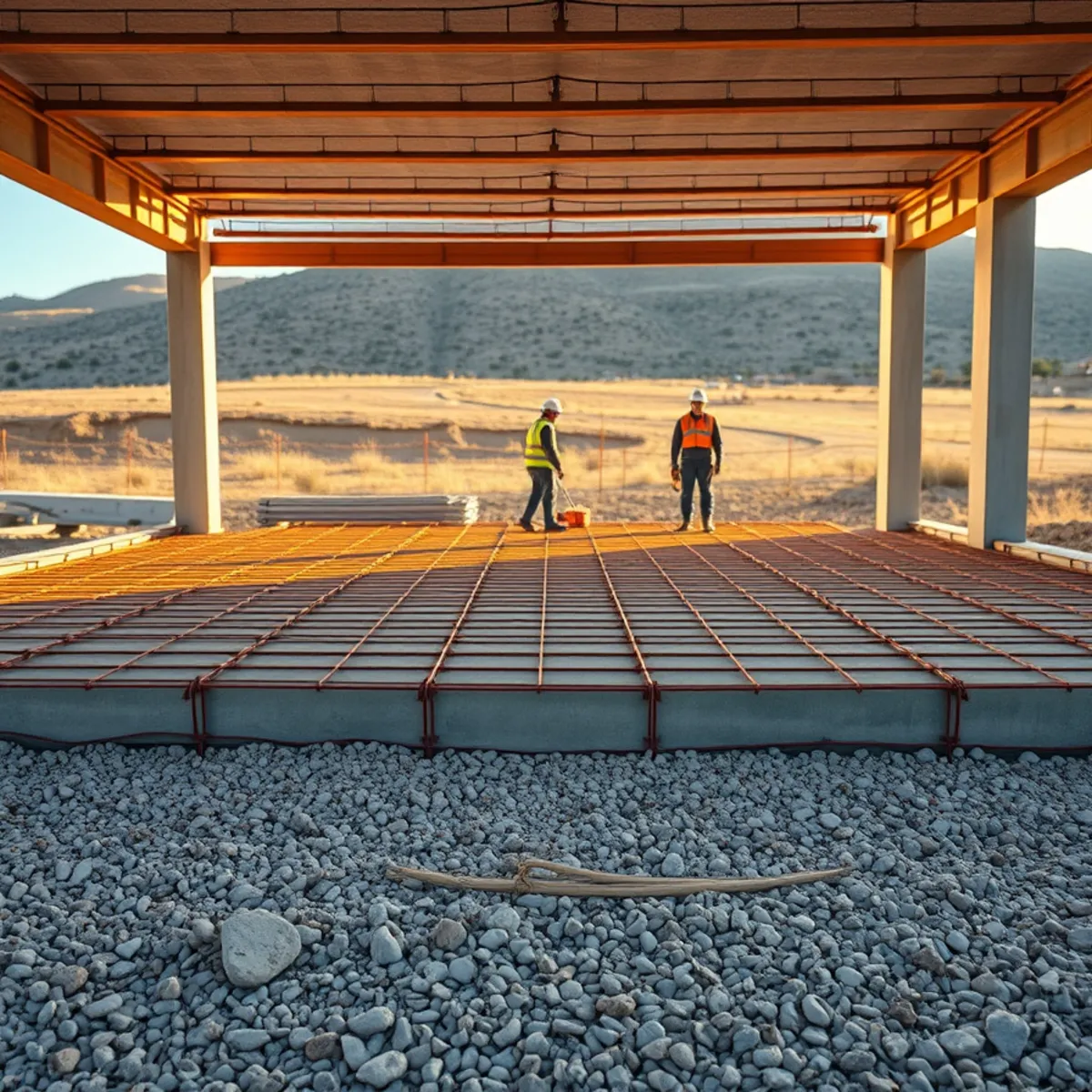
Two slabs poured at the same thickness can behave completely differently based on what is under and inside them. Reinforcement — wire mesh or a rebar grid — holds the slab together and keeps small cracks from spreading. On heavier pads we tie a proper rebar mat. That steel adds material and labor, and it is worth it.
The base matters just as much. Much of Colorado, Pueblo County included, sits on expansive clay that swells and shrinks with moisture. A slab poured straight on that soil moves with it. We excavate, install and compact a gravel base, and set proper drainage so the slab has a stable footing that will not heave. Control joints are cut at planned spacing so any shrinkage cracking follows the line you want instead of wandering across the surface. That prep and detailing is a real part of the cost, and it is the difference between a flat slab in ten years and a cracked one.
Add a vapor barrier under any covered slab
What pushes slab cost up or down
- Size and thickness — more square feet and more inches mean more concrete and steel.
- Reinforcement — mesh is cheaper than a full rebar mat; heavy loads need the mat.
- Base and grading — poor soil, a sloped lot, or fill that must be built up all add prep.
- Access — if the truck cannot reach the pour, we pump or wheelbarrow it, which adds labor.
- Finish — a broom finish is standard; a smooth trowel or a sealed decorative finish adds cost.
- Demolition — removing and hauling an old slab adds a line to the bid.
The cleanest way to price a slab is a quick site visit. We measure, check the soil and access, and give you a written number — free, whether you are in Pueblo, out in Cañon City, or anywhere in between. Veterans get 10% off. When you are ready, call M.A.M. Concrete at (833) 334-0468 and we will help you spec the slab right the first time.
Frequently asked questions
Written by M.A.M. Concrete
A locally owned concrete contractor pouring driveways, patios, and foundations across Pueblo County & Southern Colorado. We write what we know from the job site.
Services mentioned in this article
Concrete Slabs
Garage, shop, shed & RV slabs plus hot-tub and AC pads — poured at the right thickness and reinforcement so they never sink.
Learn moreConcrete Foundations
Slab-on-grade, stem-wall & footing foundations engineered for Pueblo County's expansive clay soils and built to stay level.
Learn moreGarage Floor Coatings
Epoxy & polyaspartic garage floor coatings with flake — ground and sealed to resist hot tires, oil, and road salt.
Learn more