The foundation is the one part of a new home you cannot fix cheaply later. Everything above it — the framing, the finishes, the resale value — rides on getting it right. So when people ask what a foundation costs in Pueblo County, the real answer starts with a second question: what is your soil, and what kind of foundation does your build call for?
This guide gives you honest planning ranges for the three foundation types you will choose between — slab-on-grade, stem wall, and full basement — and explains why Pueblo County's expansive soil adds engineering that flat national numbers leave out. Foundations are engineered per lot, so treat everything here as a starting point, not a quote.
Foundation cost in Pueblo County at a glance
Foundations are usually priced by the square foot of footprint, then adjusted for soil, depth, and engineering. The ranges below are general planning figures for the Pueblo area in 2026, spanning a typical 1,500 to 2,000 square foot footprint:
| Foundation type | Cost per sq ft of footprint | Typical total (1,500–2,000 sq ft) |
|---|---|---|
| Slab-on-grade (monolithic) | $8–$15 | $12,000–$30,000 |
| Stem wall / crawl space | $14–$25 | $21,000–$50,000 |
| Full basement (unfinished) | $25–$45 | $37,500–$90,000 |
These are general ranges for planning — your exact price is confirmed on a free on-site estimate. Foundation pricing swings widely with your soils report, lot slope, and the structural engineer's design, so the spread here is intentionally broad.
Slab-on-grade vs. stem wall vs. full basement
Each foundation type solves a different problem. The right one depends on your soil, your lot, your budget, and whether you want the extra square footage a basement adds.
Slab-on-grade
A single monolithic slab poured with thickened, reinforced footings at the edges and under load points. It is the most economical foundation and pours fast, which is why it is common for ranch-style homes, additions, and shops. For a detached garage or shop that does not need a crawl space, a well-built concrete slab is often all the base you need. The trade-off with a home on slab-on-grade: no crawl space or basement, and utilities run within or under the slab. On expansive soil it needs careful engineering — often a stiffened, post-tensioned, or heavily reinforced design so ground movement does not crack it.
Stem wall (crawl space)
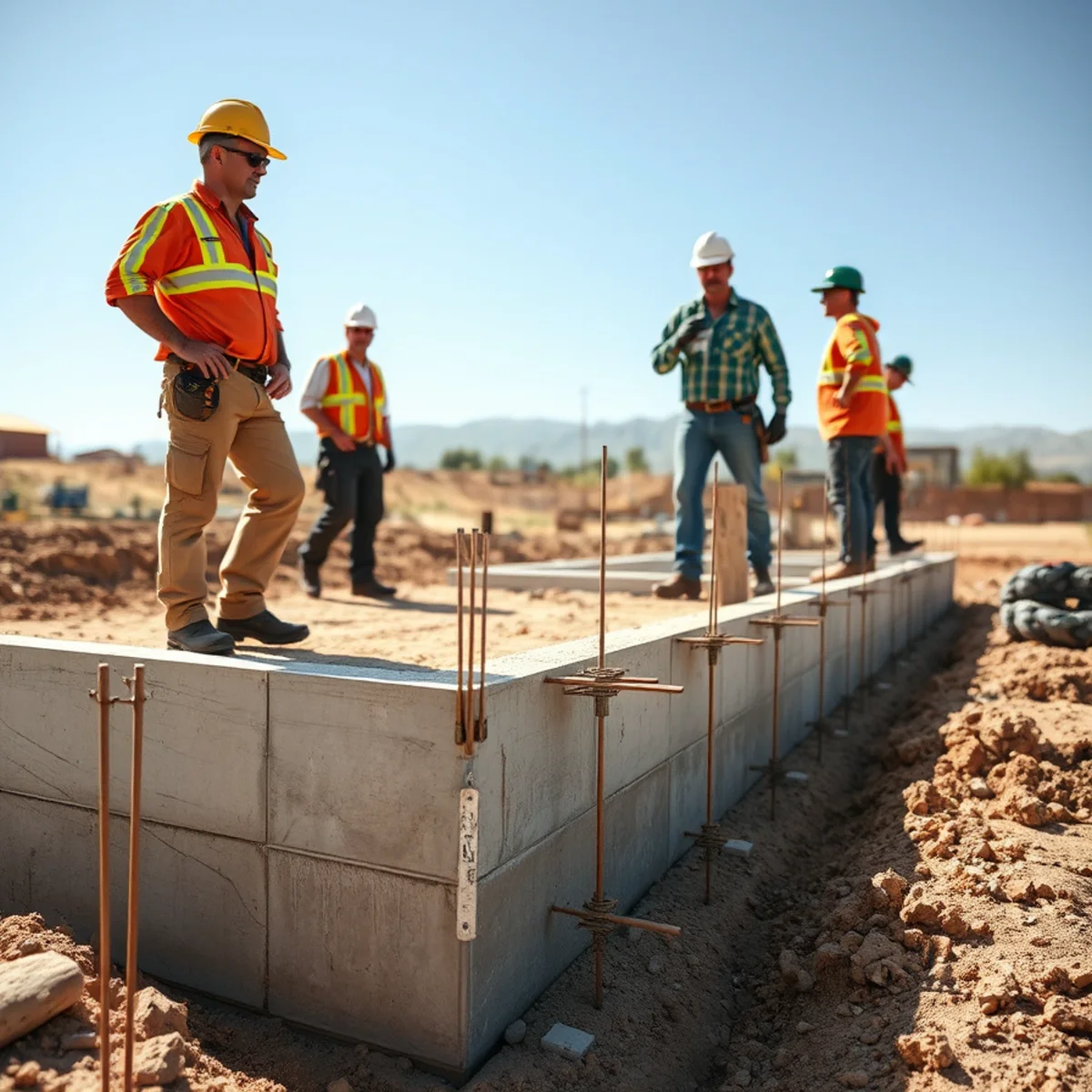
Concrete footings carry short foundation walls that lift the house off the ground, leaving a crawl space beneath. This raises the structure above expansive clay, keeps plumbing and wiring accessible, and handles sloped lots well. It costs more than a slab because there is more excavation, forming, and concrete — but many builders in our area prefer it for exactly the soil reasons below.
Full basement
Deep footings and tall foundation walls create a full lower level. It is the most expensive foundation up front, but it nearly doubles your usable square footage at a lower cost per foot than above-grade living space, and it is popular for that reason. Budget for waterproofing, a perimeter drain, and later a basement floor — and note that finishing the basement is a separate cost on top of the foundation.
Why Pueblo County soil drives the price
This is the part national cost calculators miss. Large stretches of Pueblo County and the Front Range sit on expansive clay — soil with clays that swell dramatically when they take on water and shrink when they dry out. That movement can lift and drop a foundation unevenly, and it is the leading cause of foundation cracking and heave in Southern Colorado.
Building on it safely costs more, and here is where the money goes: a geotechnical soils report to identify what is actually under your lot, then an engineered design to match. Depending on the findings, that can mean deeper footings, drilled piers or caissons that reach stable soil, over-excavation and replacement with engineered fill, void form under grade beams, and heavier reinforcement. None of it is optional padding — it is what keeps the house level for the long haul. Our concrete foundations service page walks through how we build for these conditions.
Never skip the soils report
What is included in a foundation bid
A foundation number is bigger than concrete because it covers everything that gets you to a finished, backfilled base ready for framing:
- Excavation and grading — digging to depth, dealing with slope, and hauling spoil.
- Footings — the widened, reinforced base that spreads the load into the soil.
- Reinforcement — the rebar schedule the structural engineer specifies.
- Forming and concrete — walls, slabs, and grade beams poured to plan.
- Waterproofing and drainage — damp-proofing plus a perimeter drain on stem walls and basements.
- Anchor bolts, backfill, and cleanup — tying the sill to the concrete and closing the site back up.
Site prep and engineering are where two lots of the same size diverge most. A flat lot with good soil and a steep lot on deep clay can be worlds apart, even with the same house plan on top.
If you are planning a new home or an addition in Pueblo or Pueblo West, the smartest first step is a conversation and a look at your lot. We will talk through the foundation type that fits your build, coordinate with your engineer, and put a real number in writing. Estimates are free, veterans get 10% off, and we would rather help you plan it right than rush it. Call M.A.M. Concrete at (833) 334-0468.
Frequently asked questions
Written by M.A.M. Concrete
A locally owned concrete contractor pouring driveways, patios, and foundations across Pueblo County & Southern Colorado. We write what we know from the job site.
Services mentioned in this article
Concrete Foundations
Slab-on-grade, stem-wall & footing foundations engineered for Pueblo County's expansive clay soils and built to stay level.
Learn moreConcrete Slabs
Garage, shop, shed & RV slabs plus hot-tub and AC pads — poured at the right thickness and reinforcement so they never sink.
Learn moreBasement Concrete Floors
New basement slabs, leveling & vapor-barrier prep — dry, flat floors ready to finish or coat, built for Pueblo's clay soils.
Learn more