A new patio is one of the best upgrades you can make to a Pueblo backyard, and two options dominate the conversation: stamped concrete and pavers. Both can look terrific. Both can last for decades. But they behave differently in our climate, they cost different amounts, and they age in different ways.
This guide lays out the real pros, cons, and costs of each — with an honest eye on what freeze-thaw winters and expansive clay soils do to a patio in Southern Colorado. By the end you will know which one fits your yard, your budget, and how you actually want to spend your weekends.
The short version
Stamped concrete gives you the widest range of looks for the lowest installed cost, with very little upkeep — one poured surface, resealed every few years. Pavers cost more up front and can shift over time on our soils, but a single unit lifts out and resets easily, so a stained or cracked one is swapped without a trace. Neither is 'better.' They are built for different priorities.
Stamped concrete: pros and cons
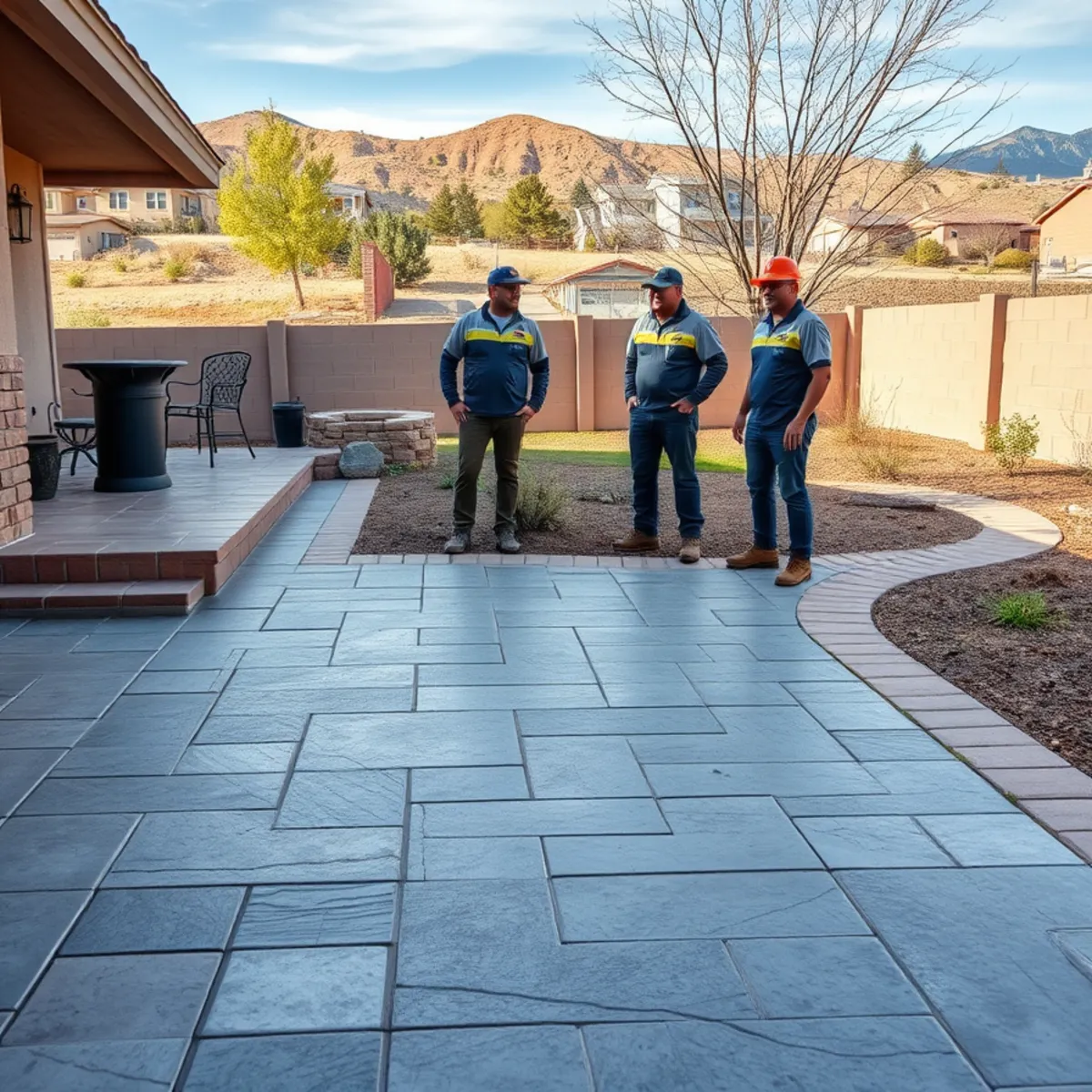
Stamped concrete is a single slab, poured and then imprinted with texture mats and colored to mimic stone, brick, slate, or wood plank. It is a favorite for patios because you get a high-end look for a fraction of the price of natural stone.
Where stamped concrete wins
- Lower installed cost — usually the more affordable of the two.
- Low maintenance — no joints to weed and no sand to top up; just clean and reseal every couple of years.
- Design range — nearly unlimited patterns, colors, and borders from one material.
- Seamless surface — no gaps for weeds, ants, or heaving units.
The trade-offs
- Cracks are harder to hide — as a solid slab it can crack over time, and a repair shows more than it would on plain gray concrete.
- Resealing is part of the deal — the color and finish depend on a fresh sealer, especially under our intense high-desert UV.
- Repairs mean patching — you fix an area by patching or resurfacing rather than replacing a piece.
Done right — a 4,000 PSI air-entrained mix, a compacted base, and well-placed control joints — stamped concrete holds up well here. Our stamped concrete work is built for Pueblo freeze-thaw, not a mild-climate catalog.
Pavers: pros and cons
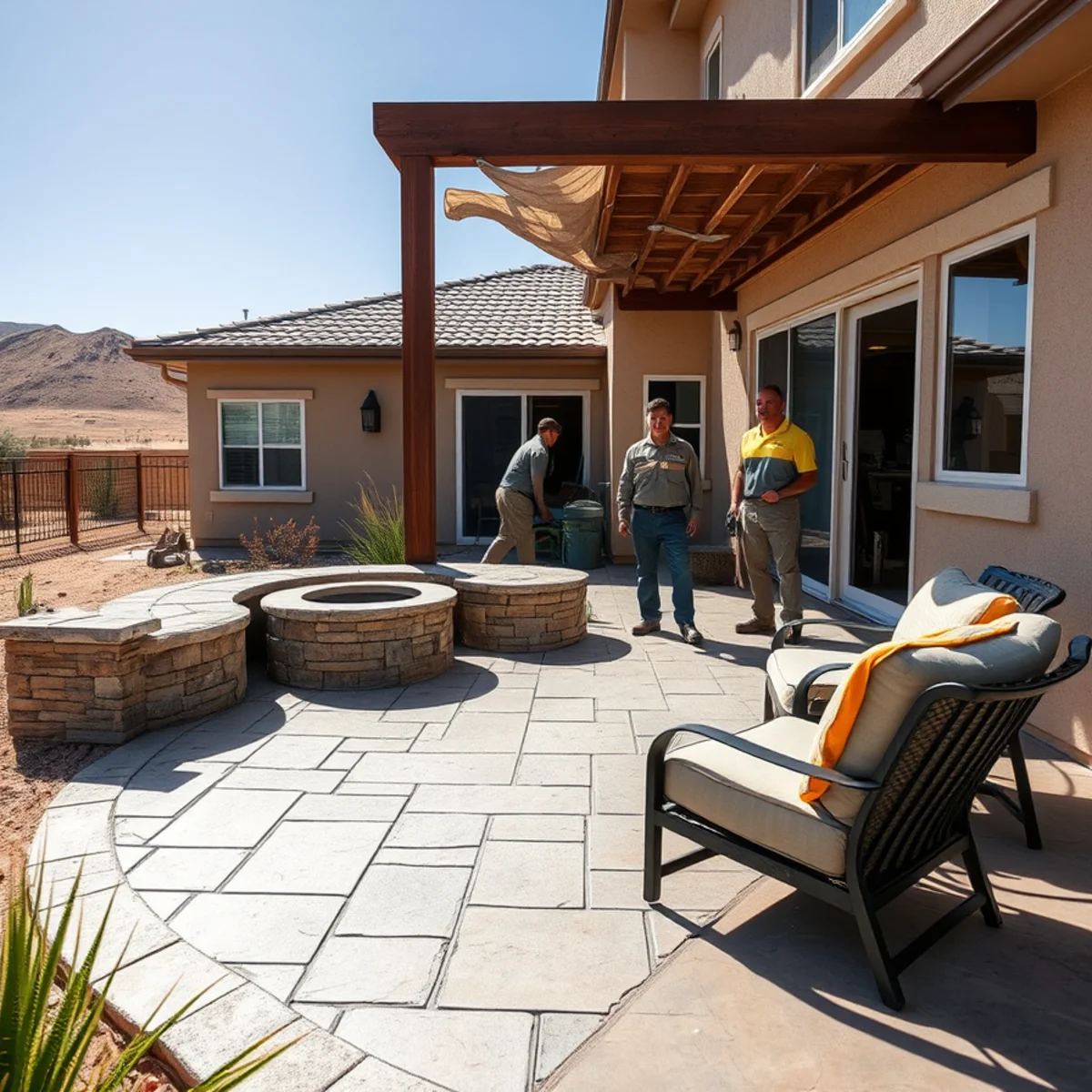
Pavers are individual units — concrete or clay brick — set over a compacted base and bedding sand, locked together at their edges and by the sand in the joints. Because the surface is many small pieces, it flexes with the ground instead of cracking.
Where pavers win
- No long cracks — the joints absorb ground movement, so you won't get one crack running across the patio.
- Invisible spot repairs — lift a damaged paver and drop in a match; the fix disappears.
- Ready right away — no multi-day cure; you can use the patio as soon as it is set.
- Good traction — the textured, jointed surface grips well underfoot.
The trade-offs
- Higher installed cost — more material and much more labor per square foot.
- Joints need attention — sand washes out over time and can invite weeds or ants if ignored.
- Shifting on clay — pavers can heave or dip on expansive soil and may need re-leveling over the years.
When pavers are the right call, our paver installation crews build the deep, compacted base that keeps them stable on our soils — the step budget installers tend to skip.
Stamped concrete vs. pavers, side by side
| Factor | Stamped concrete | Pavers |
|---|---|---|
| Installed cost | Lower — roughly $14–$22 / sq ft | Higher — roughly $16–$26 / sq ft |
| Maintenance | Reseal every 2–3 years; no joints | Top up joint sand; occasional weeding |
| Durability | Very durable as one slab; can crack | Very durable; flexes with the ground |
| Freeze-thaw | Excellent with air-entrained mix and sealer | Excellent; joints absorb movement |
| Repairs | Patch or resurface — harder to hide | Swap single units invisibly |
| Look and versatility | Nearly unlimited patterns and colors | Classic modular look; premium materials |
What it costs in the Pueblo area
Ballpark installed pricing in Southern Colorado runs about $14–$22 per square foot for stamped concrete and $16–$26 per square foot for pavers, with complex multi-color stamping or premium paver materials reaching the top of those ranges. For a typical 300–400 square foot patio, that puts stamped concrete around $6,000–$12,000, with pavers a step above.
Our expansive soils and freeze-thaw cycles push base-prep costs a little higher here than the national average — and the base is exactly what you should not cut. These are general ranges for planning; your exact price is confirmed on a free on-site estimate. For a closer look, see our Pueblo patio cost guide.
Which is right for your Pueblo patio?
Choose stamped concrete if you want the most design flexibility for the money, a seamless surface with minimal upkeep, and you are fine resealing every couple of years. It is the value pick for most Pueblo and Pueblo West backyards.
Choose pavers if you never want to see a long crack, you like the modular look, and you value being able to lift and reset sections down the road. They cost more, but that repairability is genuinely useful on ground that moves — and ours moves.
The base matters more than the surface
Get a real number for your yard
Still torn? That is normal — the right answer depends on your yard, your soil, and how you want to use the space. We install both, so our advice isn't tied to selling you one or the other. We will walk your yard, talk through the trade-offs, and give you an honest recommendation with a free written estimate. Serving Pueblo and Southern Colorado, M.A.M. Concrete builds patios that last. Call (833) 334-0468 to set yours up.
Frequently asked questions
Written by M.A.M. Concrete
A locally owned concrete contractor pouring driveways, patios, and foundations across Pueblo County & Southern Colorado. We write what we know from the job site.
Services mentioned in this article
Stamped Concrete
The look of flagstone, slate, or wood-plank stone — poured as one durable slab, colored full-depth and sealed for Pueblo weather.
Learn morePaver Installation
Interlocking paver patios, driveways, and walkways in Pueblo — proper base prep, edge restraints, and polymeric joints that stay tight.
Learn moreConcrete Patios
Broom, stamped, or exposed-aggregate patios poured for Pueblo's sun and freeze-thaw — with drainage that protects your home.
Learn more