
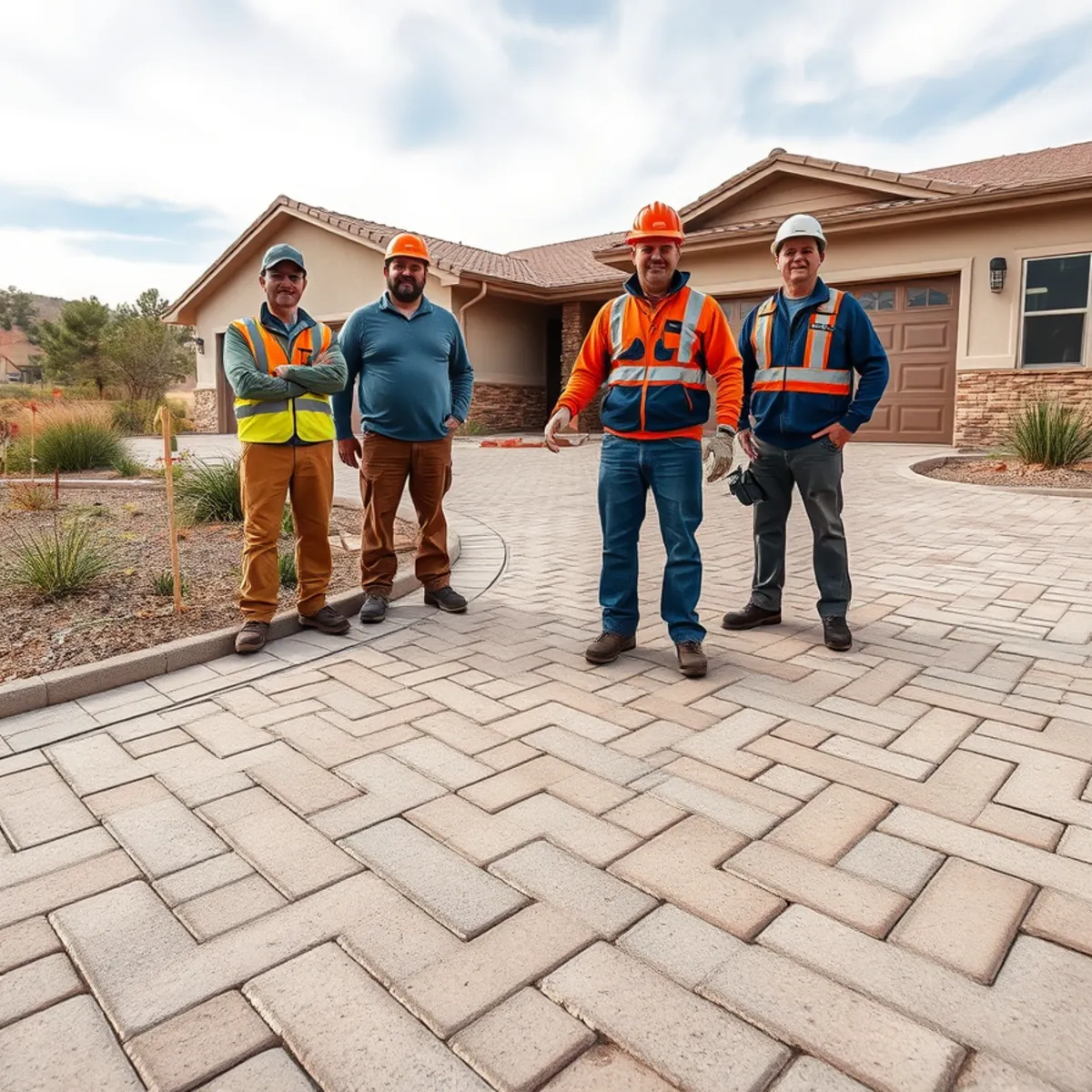
Pavers give you the look of individual stone or brick units set in a pattern — and a few real advantages over a poured slab. Because the joints between pavers flex, an interlocking paver surface moves with Pueblo's freeze-thaw and clay soils instead of cracking across the middle like a rigid slab can. And if a section ever settles or stains, we can lift and reset individual pavers rather than patching concrete.
M.A.M. Concrete installs interlocking concrete pavers for patios, driveways, and walkways, and the finished surface is only as good as the base beneath it. We build ours the right way: excavated deep, compacted in lifts, screeded, and edge-restrained so your pavers stay tight and level for the long haul. Pavers are part of what this business is known for, right alongside our poured concrete work.
Why the base is everything
Nine out of ten paver problems — sinking, rutting, lifting, wavy surfaces — trace back to a rushed base. Pavers don't rely on the strength of concrete; they rely on a properly built foundation of compacted aggregate and bedding sand. In Pueblo's expansive clay soils, that base has to be deep enough and compacted hard enough to stop movement before it starts.
We excavate to the right depth for the use — deeper for a driveway that carries vehicles than for a garden path — lay and compact the aggregate base in lifts, screed a precise sand bedding layer, then set the pavers tight. Edge restraints lock the perimeter so the field cannot spread, and we finish by sweeping polymeric sand into the joints, which hardens to resist weeds, ants, and washout.
Interlocking pavers and how they work
Interlocking pavers transfer load sideways to their neighbors, so weight spreads across the surface instead of concentrating in one spot. That's why a well-built paver driveway can carry heavy vehicles without cracking. The joints between units give the surface just enough flex to ride out freeze-thaw heave — the movement that cracks rigid slabs — and the pattern you choose affects both looks and strength. For driveways we favor herringbone, which resists shifting under turning tires.
Where paver installation shines
- Patios — a flexible, upscale surface that will not develop a crack down the middle, and is easy to expand later.
- Driveways — interlocking pavers carry vehicle loads and let you replace a stained unit instead of a whole slab.
- Walkways and paths — clean edges and pattern options that tie your yard together.
- Pool decks and courtyards — slip-resistant options that stay comfortable underfoot in the sun.
- Steps and seat walls — pavers and wall block pair naturally with retaining walls for a coordinated landscape.
Pavers vs. stamped concrete: which is right?
This is the question we hear most, because both give you a high-end, patterned surface. Neither is simply better — they trade off differently:
- Cracking — pavers flex at the joints and rarely crack; stamped concrete is a rigid slab that can crack over time, though control joints manage it.
- Repairs — individual pavers lift and reset; stamped concrete is patched or resurfaced.
- Upfront cost — stamped concrete usually costs less to install than pavers for the same area.
- Upkeep — pavers may need occasional joint sand and the odd reset; stamped concrete needs periodic resealing.
- Look — pavers are true individual units with crisp joints; stamping mimics stone or brick in one continuous surface.
We install both, so our advice isn't tilted toward one. For a full breakdown with local pricing, see our guide on stamped concrete vs. pavers in Pueblo. If you'd rather have a poured surface, our concrete patios and concrete driveways pages lay out those options.
Our paver installation process
- Free on-site estimate. We measure, check drainage and soil, review paver styles and patterns, and send a written quote.
- Layout and excavation. We mark the area, call in utility locates, and excavate to the proper depth for how you will use the surface.
- Base and compaction. We place and compact the aggregate base in lifts and set the drainage slope away from your home.
- Bedding and setting. We screed a precise sand layer and set the pavers in your chosen pattern, cutting clean edges as needed.
- Edge restraint and joint sand. We lock the perimeter with edge restraints and sweep polymeric sand into the joints.
- Compact, clean, and walk-through. We compact the surface to seat the pavers, clean up, and walk the finished project with you.
Ask about polymeric joint sand
Cost factors for a paver project
Paver pricing depends on more than square footage. What moves the number:
- Paver style and quality — basic pavers cost less than premium tumbled, textured, or large-format units.
- Base depth — a driveway needs a deeper, stronger base than a garden path.
- Pattern and cuts — herringbone and curved layouts take more labor and generate more cuts than a simple running bond.
- Site prep — removing an old surface, correcting drainage, or building up poor soil adds to the base work.
- Extras — borders, seat walls, steps, and lighting all add scope.
For patios specifically, our Pueblo concrete patio cost guide offers realistic planning ranges. We confirm your exact number with a free on-site estimate.
Why Pueblo homeowners choose M.A.M. Concrete
Pavers are only as good as the crew that sets them. We're locally owned, we build the base properly instead of rushing to the fun part, and we stand behind our work. You get honest guidance on pavers versus poured concrete, free estimates, and a 10% veteran discount. From Pueblo West patios to in-town driveways, we set pavers that stay tight and level season after season.
Ready to talk about your paver installation project?
Free on-site estimates across Pueblo County & Southern Colorado. Call (833) 334-0468 or request a quote — we'll take it from there.
Paver Installation: frequently asked questions
Related Services
Stamped Concrete
The look of flagstone, slate, or wood-plank stone — poured as one durable slab, colored full-depth and sealed for Pueblo weather.
Learn moreConcrete Patios
Broom, stamped, or exposed-aggregate patios poured for Pueblo's sun and freeze-thaw — with drainage that protects your home.
Learn moreConcrete Retaining Walls
Poured concrete retaining walls in Pueblo — engineered footings and built-in drainage that hold sloped and hillside yards for decades.
Learn moreHelpful Reading
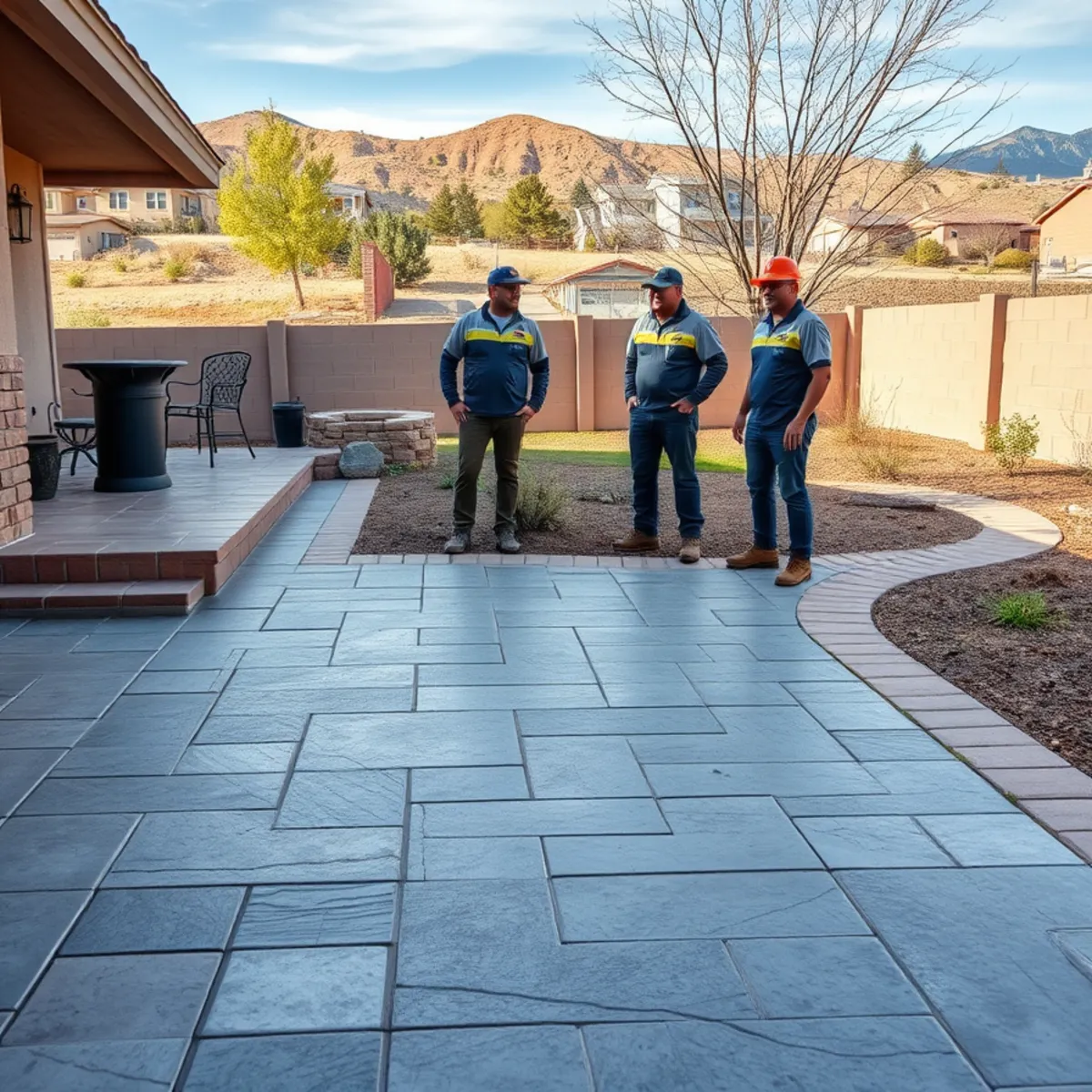 Comparisons
Stamped Concrete vs. Pavers for Pueblo Patios: Pros, Cons & Cost
Stamped concrete or pavers for your Pueblo patio? An honest look at the cost, maintenance, durability and freeze-thaw performance of each.
Read article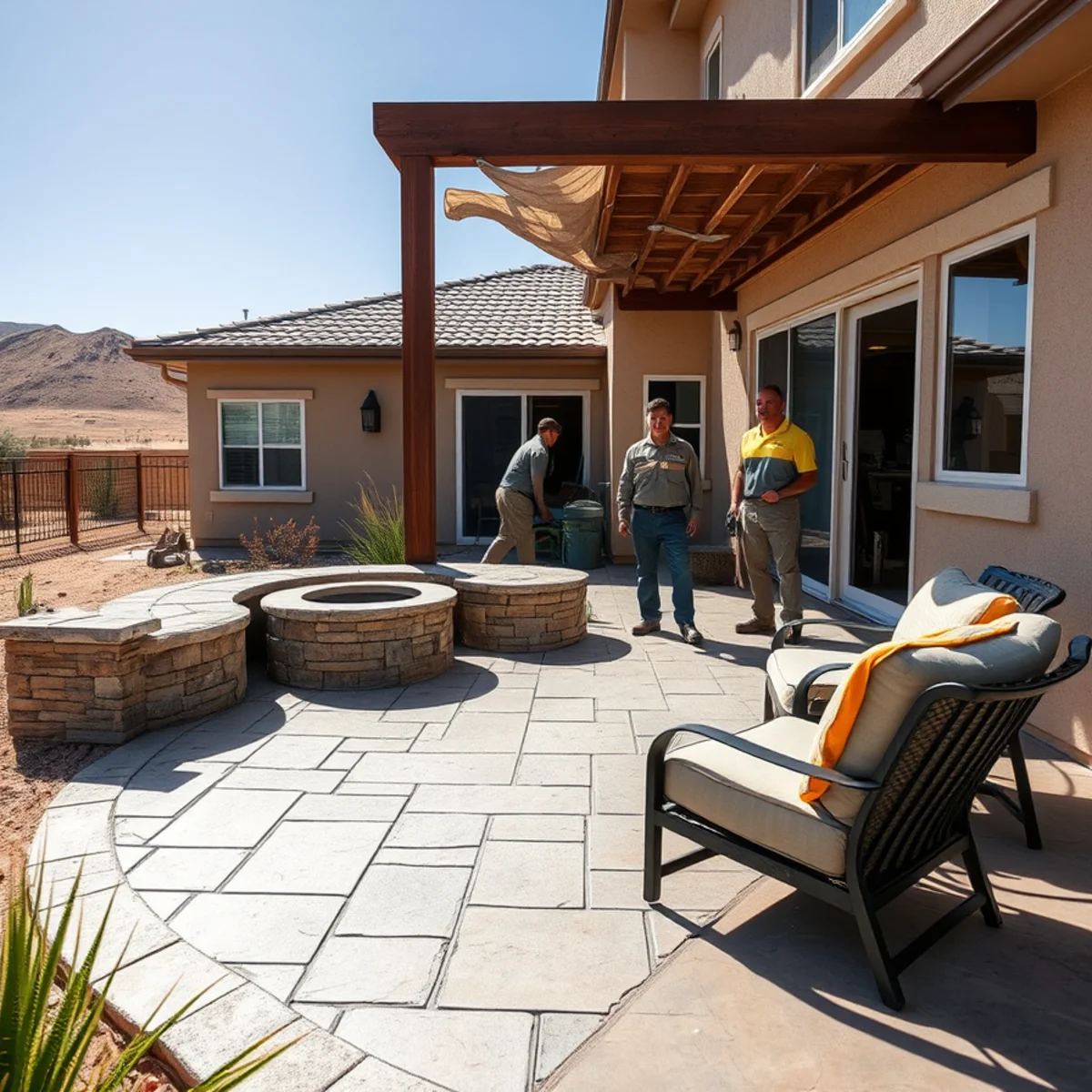 Cost Guides
Concrete Patio Cost in Pueblo: What Homeowners Should Expect
What a concrete patio costs in Pueblo, CO — price by size, plain vs. stamped vs. exposed aggregate, and how add-ons like fire pits add up.
Read article