The ground under a lot of Pueblo County homes is not as stable as it looks. Much of Southern Colorado sits on expansive clay — soil that swells when it gets wet and shrinks back as it dries. That slow, powerful movement is the hidden force behind more cracked foundations, heaved slabs, and sticking doors than any other single cause in our area.
If you're building, buying, or noticing cracks, this is worth understanding. The good news is that expansive soil is a known quantity here, and concrete built the right way lives with it just fine. It comes down to base prep, footing depth, reinforcement, and — more than anything — controlling water.
What makes soil expansive?
Certain clay minerals act like a sponge. When water reaches them, they absorb it and expand, sometimes with enough force to lift a house. When the soil dries out, those same clays shrink and pull away. Repeat that wetting and drying season after season and the ground is in constant, uneven motion. Colorado is well known for these soils along the Front Range and the foothills, and Pueblo County is no exception.
Not every lot is affected the same way — expansive clay can vary from one block to the next, and some of the newer areas around Pueblo West sit on especially reactive ground. That's exactly why a foundation that worked fine across town might be the wrong design for your parcel. The soil under your specific site is what matters.
Heave and settlement: two sides of the same problem
Expansive soil damages concrete in two opposite directions. Heave is when the clay swells and pushes upward, lifting a slab or a section of foundation — often unevenly, so one corner or the middle of a floor rises. Settlement is the reverse: the soil shrinks or was never compacted properly, and the concrete drops into the void. Both put the slab in a bind it wasn't poured to handle, and both show up as cracks.
Common warning signs around a Pueblo home include:
- Stair-step cracks in foundation walls or exterior brick
- Doors and windows that suddenly stick or won't latch
- Floors that feel sloped or bouncy, or gaps opening at baseboards
- Driveways, patios, and sidewalks that have heaved or dropped out of level
- Cracks that keep getting wider from one season to the next
How we build for expansive soil
We can't change the clay, but we can engineer around it. A foundation or slab built for expansive soil is a system, and every part of it earns its place:
- Know the ground. We assess the site and, for larger builds, work from a soils report so the design matches what is actually under the concrete.
- Build a proper base. We remove weak or highly reactive material where needed and replace it with non-expansive structural fill, compacted in thin lifts to a firm, uniform bearing.
- Control moisture. Because wet-dry swings are what drive the movement, we grade and detail the site to keep soil moisture as steady as possible.
- Go deeper with footings. Footings reach below the frost line and into more stable soil, so the foundation bears on ground that moves less.
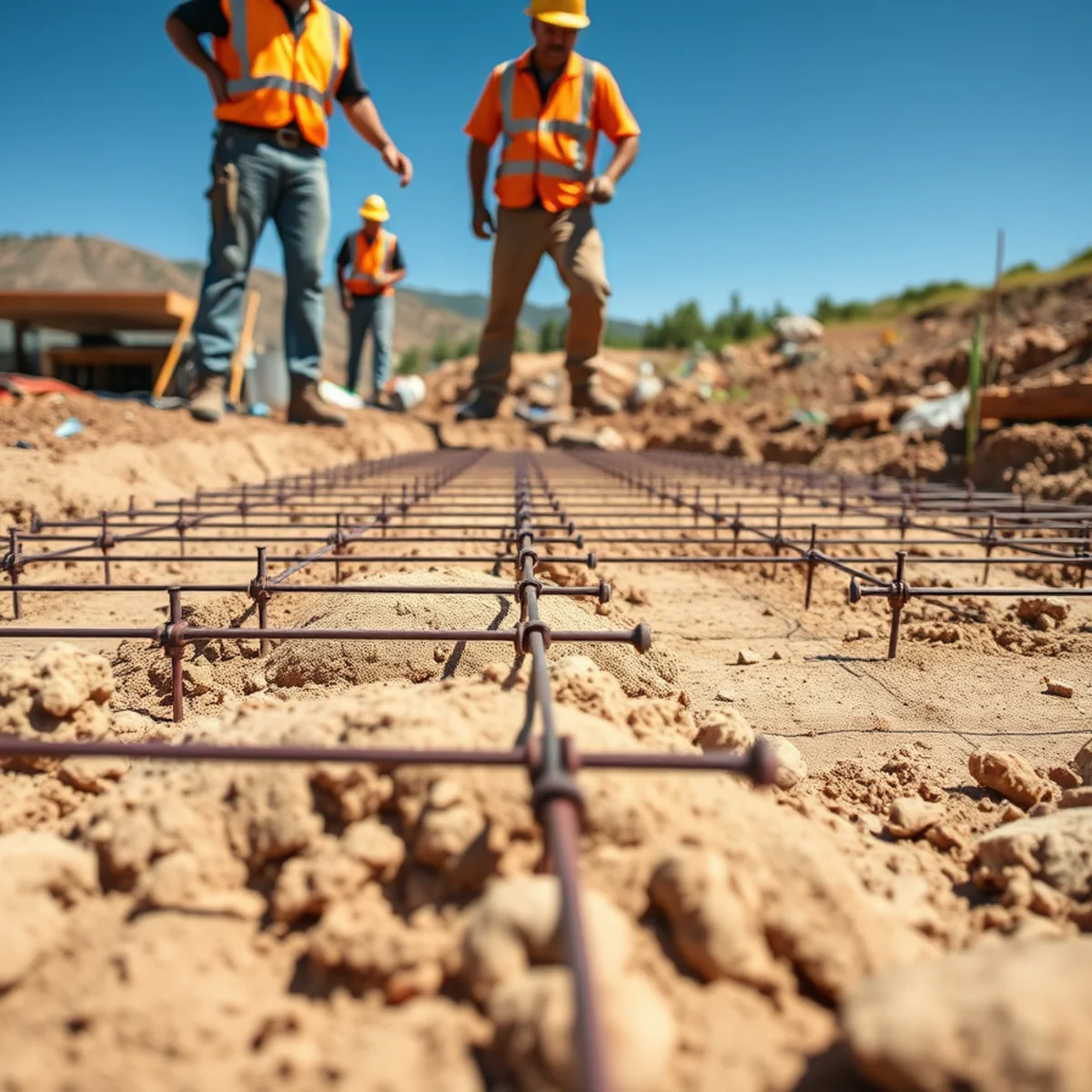
- Reinforce the concrete. Rebar, thicker slabs, and — on severe sites — engineered details give the concrete the strength to bridge minor soil movement without cracking apart.
The base is everything
You never see the base once the concrete is down, and it's exactly what determines whether the slab lasts. A well-compacted, properly graded base spreads loads evenly and gives expansive soil less room to do damage. Cutting corners here is the most common reason concrete slabs fail early in this area — the pour can be flawless and still crack if what's underneath was rushed.
Deeper footings and reinforcement
The more a foundation can bear on stable soil below the active clay, the less the seasonal swelling reaches it. Deeper footings, generous steel, and correct slab thickness let a concrete foundation flex with small movements instead of fracturing. It is not overbuilding — in Pueblo County it is building for the site you actually have.
Consistent moisture is your best friend
Drainage: the cheapest protection you have
Water is what activates expansive clay, so managing water is the highest-value thing you can do — and most of it is inexpensive. Grade the soil to fall away from the house, aiming for roughly six inches of drop over the first ten feet. Keep gutters clear and run downspouts well past the foundation. Avoid planting thirsty shrubs and trees right against the wall, and keep watering steady so the soil never fully dries and then floods.
Done consistently, good drainage keeps the clay from cycling through big volume changes — which is the whole game. It's cheaper than any repair and it protects everything from your foundation to your flatwork.
When expansive soil has already moved your concrete
If a slab or driveway has heaved or settled, you're not necessarily looking at a teardown. A sunken but sound slab can often be lifted back to level, and cracks can be sealed before water works in and makes them worse — our concrete repair and leveling crew can assess what's cosmetic and what needs real attention. For a new garage slab, addition, or foundation, the answer is to build it right the first time on ground we've prepared for movement.
We prep and pour for expansive soil across Pueblo West, Pueblo, and the surrounding county. If you'd like a sense of what a properly engineered foundation runs in our area, our Pueblo County foundation cost guide lays out the ranges.
Expansive soil is manageable when it's respected from the start. If you're planning new concrete or worried about movement you're already seeing, we're glad to come look and give you a straight assessment. Estimates are always free, we offer a 10% veteran discount, and we'll tell you honestly what your site needs. Call (833) 334-0468 to schedule your free on-site estimate.
Frequently asked questions
Written by M.A.M. Concrete
A locally owned concrete contractor pouring driveways, patios, and foundations across Pueblo County & Southern Colorado. We write what we know from the job site.
Services mentioned in this article
Concrete Foundations
Slab-on-grade, stem-wall & footing foundations engineered for Pueblo County's expansive clay soils and built to stay level.
Learn moreConcrete Slabs
Garage, shop, shed & RV slabs plus hot-tub and AC pads — poured at the right thickness and reinforcement so they never sink.
Learn moreConcrete Repair
Concrete crack repair, spalling, and resurfacing in Pueblo — we fix the cause, not just the symptom, and tell you when to repair vs. replace.
Learn more