
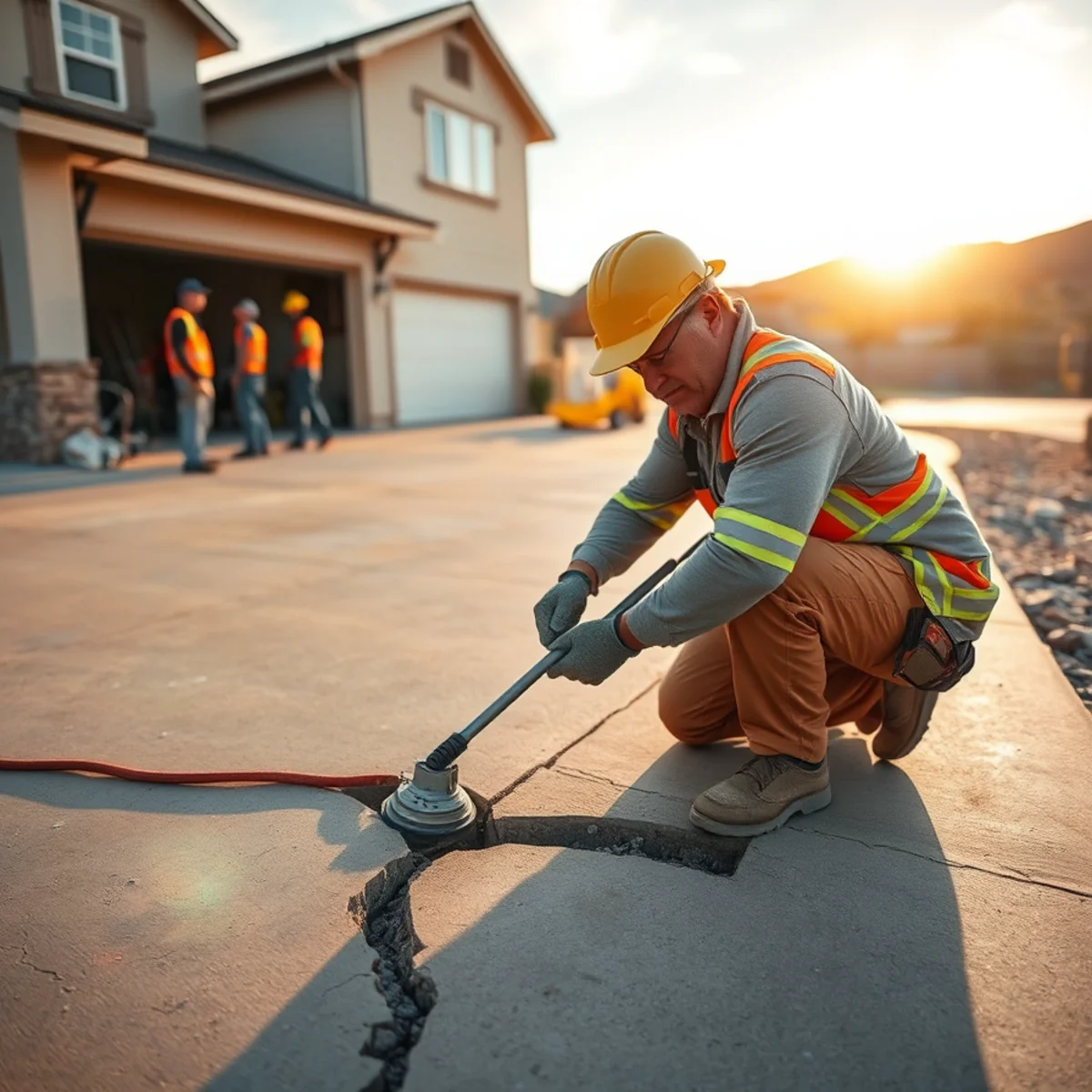
Not every crack means you need to tear out and replace. A lot of concrete in Pueblo can be repaired — cracks sealed, spalled surfaces resurfaced, sunken slabs raised — for a fraction of the cost of a full pour. The trick is knowing which damage is cosmetic, which is structural, and which is a warning sign of a base problem underneath. Repair the wrong thing and you're just buying time; repair the right thing and you add years to the slab.
M.A.M. Concrete repairs residential and commercial concrete across Pueblo County — driveways, patios, sidewalks, steps, garage floors, and foundations. We'll give you an honest read on whether a repair makes sense or whether replacement is the smarter money, and we'll never sell you a patch on concrete that's past saving. When repair is the right call, we fix the cause, not just the symptom.
Why concrete cracks and spalls in Pueblo
Most concrete damage here comes down to three local culprits: freeze-thaw, expansive clay soils, and deicing salt. Water gets into the surface and into cracks, freezes and expands through dozens of cycles each winter, and pries the concrete apart. Our clay soils swell when wet and shrink when dry, moving slabs from below. And deicing salt accelerates surface scaling and eats at the concrete over time. Knowing which of these caused your damage tells us how to repair it so it does not come right back — our guide on why concrete cracks in Southern Colorado digs into the details.
Concrete problems we repair
- Cracks — from hairline surface cracks to wider structural cracks; we clean, fill, and seal them to keep water out.
- Spalling and scaling — flaking, pitting, and a rough, deteriorating surface from freeze-thaw and salt; often resurfaced.
- Sunken or uneven slabs — trip hazards and pooling water, usually fixed by concrete leveling rather than replacement.
- Failed joints and caulk — dried-out, gapping control and expansion joints that let water reach the base.
- Pitted, worn surfaces — driveways and garage floors that have lost their smooth top layer.
- Corner and edge breaks — crumbling edges on steps, curbs, and slabs.
How we repair concrete
Crack repair and joint sealing
We rout or clean out the crack, then fill it with the right material for the job — flexible polyurethane or specialized sealants for moving cracks, rigid patch compounds for stable ones. Sealing cracks and refreshing control joints keeps water out of the slab and the base below, which stops freeze-thaw from turning a small crack into a big one.
Resurfacing and overlays
When the surface is spalled or worn but the slab is structurally sound, a polymer-modified overlay can give you a fresh, uniform surface at far less than replacement cost. We profile and clean the old concrete, repair the low spots, and bond a new wear layer on top — optionally with color or a decorative finish.
Leveling sunken slabs
If a slab has sunk but is otherwise solid, we lift it back to grade with concrete leveling and mudjacking instead of tearing it out — cheaper, faster, and less disruptive than a new pour.
Sealing cracks isn't optional here
Repair or replace? How to decide
We give you a straight answer based on what we find, not on what's easiest to sell. In general:
- Repair makes sense when the slab is structurally sound, the base is intact, and the damage is surface-level, cosmetic, or limited to a few cracks or one settled section.
- Replace makes sense when cracks are wide and branching across the slab, multiple sections have heaved or broken, the base has failed, or you have been chasing patches for years.
Sometimes the honest answer is a mix — repair now to get a few more seasons, replace when it's due. If your driveway or patio is near the end, we'll tell you, and we'll help you plan the replacement on your timeline.
What affects the cost of concrete repair
- Type and extent of damage — sealing a few cracks is a small job; resurfacing a whole driveway is a larger one.
- Repair method — crack filling, joint sealing, resurfacing, and leveling each carry different costs.
- Access and prep — cleaning, profiling, and removing failed material all factor in.
- Cause — if a base or drainage problem caused the damage, fixing the cause adds scope but prevents a repeat.
- Finish — matching color or adding a decorative overlay affects the price.
Why Pueblo homeowners choose M.A.M. Concrete
We're the crew that tells you the truth about your concrete. Locally owned, honest about repair versus replace, and focused on fixing the cause so the damage doesn't return. You get free estimates, a 10% veteran discount, and workmanship we stand behind — whether it's a weekend of crack sealing or a full resurfacing. If a repair can save you money, we'll find it; if it can't, we'll say so.
Ready to talk about your concrete repair project?
Free on-site estimates across Pueblo County & Southern Colorado. Call (833) 334-0468 or request a quote — we'll take it from there.
Concrete Repair: frequently asked questions
Related Services
Concrete Leveling & Mudjacking
Sunken concrete leveling and mudjacking in Pueblo — raise driveways, walkways, and patios for a fraction of replacement cost, often in a day.
Learn moreConcrete Driveways
New driveways, replacements, and widening — poured with a 4,000 PSI air-entrained mix built for Pueblo freeze-thaw.
Learn moreConcrete Patios
Broom, stamped, or exposed-aggregate patios poured for Pueblo's sun and freeze-thaw — with drainage that protects your home.
Learn moreHelpful Reading
 Local & Climate
Why Concrete Cracks in Southern Colorado — and When to Worry
Almost all concrete cracks — the question is which kind. Here is how to tell harmless shrinkage cracks from the ones that signal a real problem.
Read article Local & Climate
How Pueblo's Freeze-Thaw Cycles Damage Concrete (and How to Prevent It)
Pueblo's sunny days and cold nights drive dozens of freeze-thaw cycles a winter. Here's how they damage concrete and the proven ways to stop it.
Read article