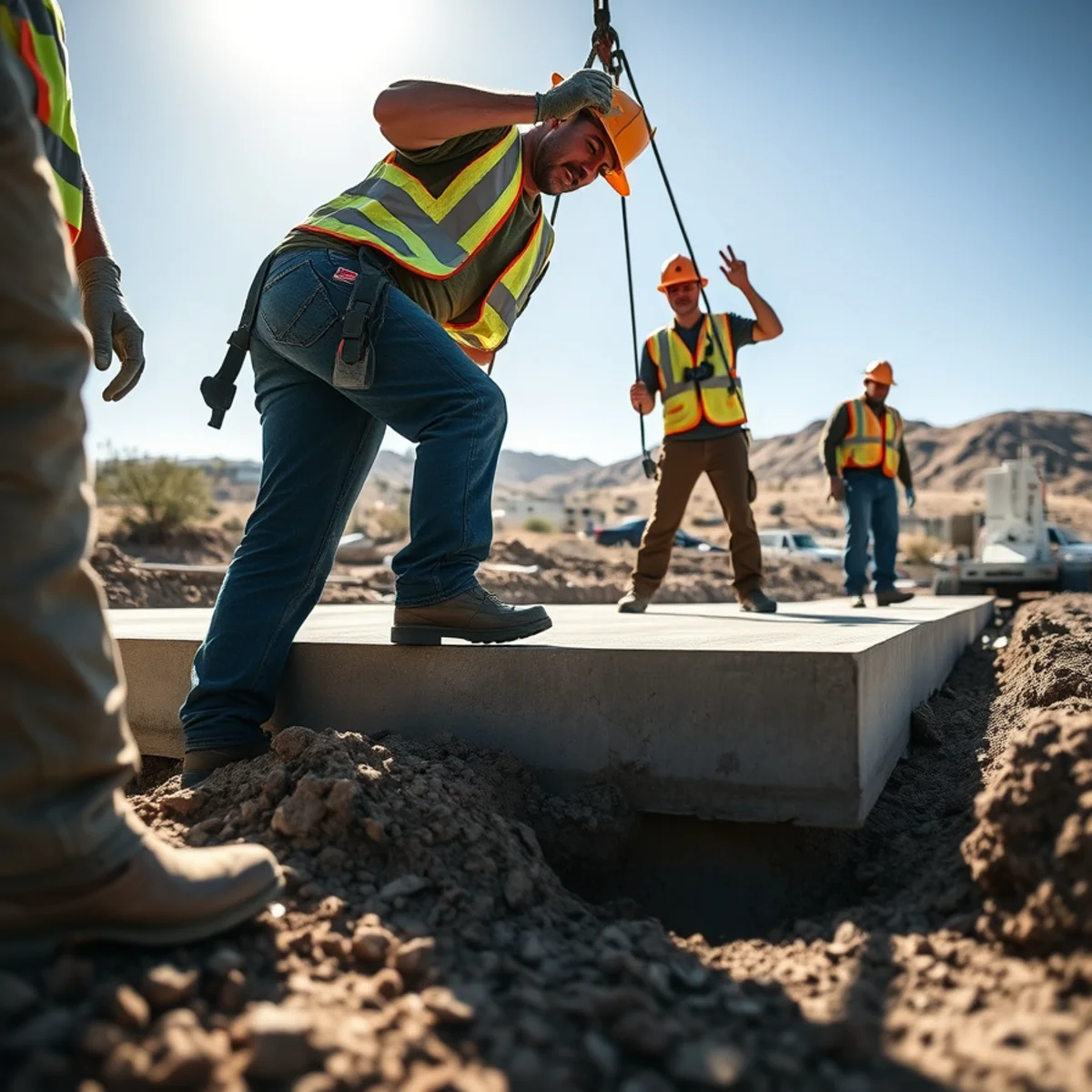
A sunken slab is usually a base problem, not a concrete problem. When the soil under a driveway, walkway, or patio settles or washes out, the slab drops — creating trip hazards, pooling water, and doors that won't clear. The concrete itself is often perfectly good. That's the whole idea behind concrete leveling: instead of tearing out a sound slab and pouring a new one, we lift it back to grade by filling the void underneath.
M.A.M. Concrete levels sunken concrete two ways — traditional mudjacking and polyurethane foam — and both cost a fraction of replacement, with far less mess and downtime. Most jobs are done in a day, and you can often use the surface the same afternoon. We look at what caused the settling, fix the void, and tell you honestly when a slab is too far gone to save.
Why slabs sink in Pueblo
Our expansive clay soils are the usual suspect. Clay swells when it's wet and shrinks when it dries, and over years of Pueblo's wet-dry and freeze-thaw swings the soil under a slab can consolidate and leave a gap. Poorly compacted fill from the original build, eroded soil from bad drainage, and water channeled by a downspout or a leaking line all do the same thing — they create a void, and gravity does the rest. Leveling fills that void; addressing the drainage keeps it from coming back. Our guide on why concrete cracks and settles in Southern Colorado explains the soil story in depth.
Mudjacking vs. polyurethane foam
Both methods lift a slab by injecting material through small holes to fill the void beneath it. They differ in the material and the situation each suits best.
Mudjacking (slurry lifting)
Mudjacking pumps a cement-and-soil slurry under the slab through holes about the size of a silver dollar, raising it back to grade. It's proven, economical, and well-suited to heavy slabs like driveways. The slurry is heavier than foam, so it works with the ground rather than adding much load, and it's typically the lower-cost option.
Polyurethane foam lifting
Polyurethane foam is injected through smaller, dime-sized holes and expands to lift the slab. It's lightweight, so it won't add load to weak soils, and it's waterproof, cures in minutes, and fits tight or precise lifts well. It usually costs more than mudjacking but sets faster and uses smaller holes.
Neither is universally better — it depends on the slab, the soil, and the budget. We recommend the right one and explain why. For a full cost comparison, see our guide on mudjacking vs. foam leveling costs.
What we can level
- Driveways — raise a sunken approach or a dropped section instead of replacing the whole driveway.
- Sidewalks and walkways — eliminate trip hazards and uneven sidewalks.
- Patios — fix a patio that has settled and now drains toward the house.
- Garage and shed floors — lift a settled interior slab back to level.
- Steps and porches — raise a sunken stoop that has pulled away from the entry.
- Pool decks — level slabs that have dropped and now pool water.
Our concrete leveling process
- Free on-site assessment. We inspect the slab, figure out why it settled, and confirm it is a good candidate for lifting rather than replacement.
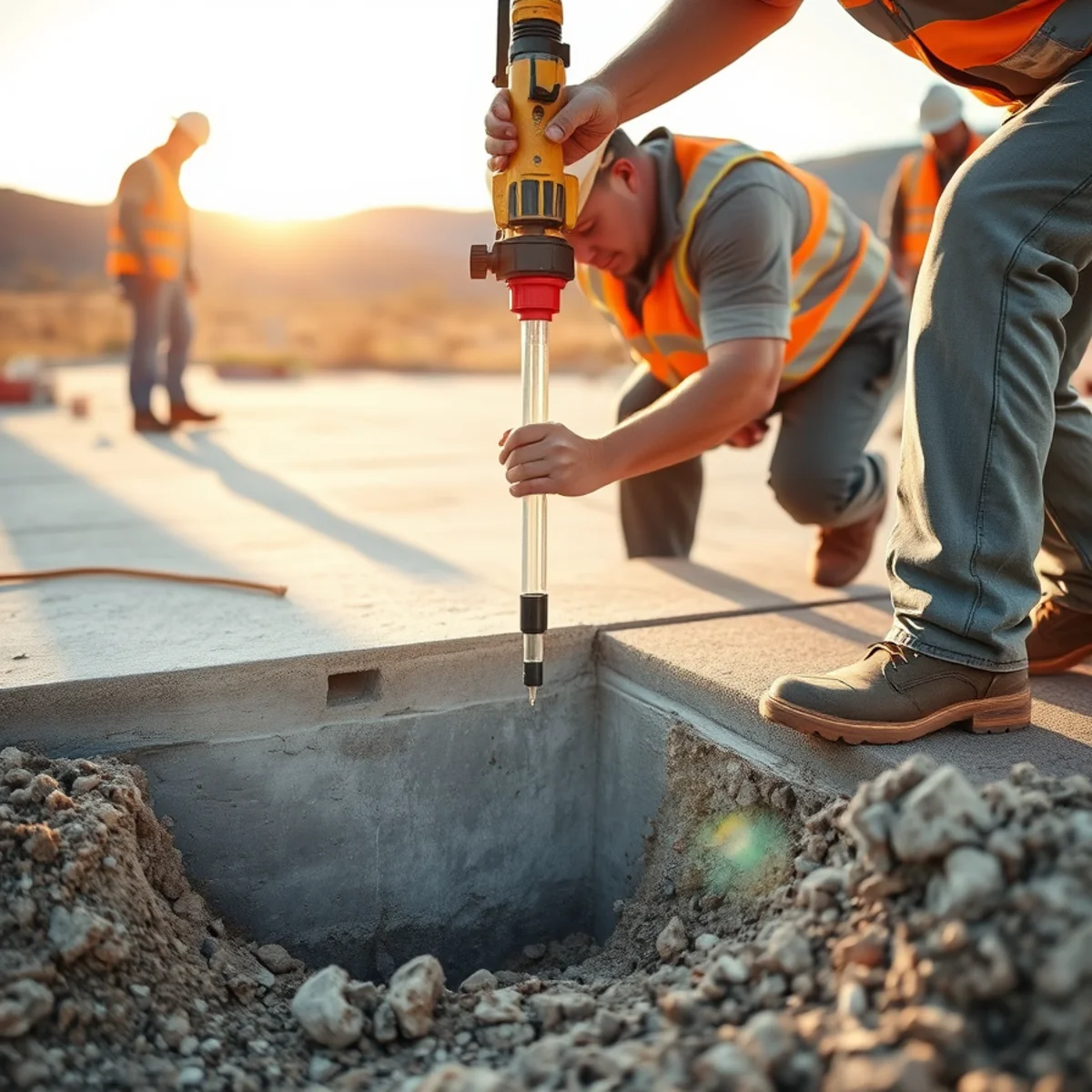
- Drill injection ports. We drill small, strategically placed holes through the slab.
- Inject and lift. We pump slurry or foam through the holes, filling the void and raising the slab in controlled stages while we monitor the level.
- Fill the voids. We make sure the space underneath is fully supported, not just the edges, so the slab will not drop again.
- Patch the holes. We fill the injection ports with a color-matched patch so they blend into the surface.
- Address drainage. We point out the drainage or downspout issue that caused the settling so you can keep it from recurring.
Leveling costs a fraction of replacement
When leveling isn't the answer
Leveling raises a slab; it cannot rebuild one. If a slab is broken into several pieces, badly spalled, or cracked through in multiple directions, lifting it just gives you a raised broken slab. In those cases replacement is the better investment, sometimes paired with concrete repair on adjacent sections. We give you a straight recommendation and never lift a slab that will not hold up afterward.
What affects the cost of leveling
- Slab size and how far it has to lift — bigger slabs and larger lifts take more material.
- Method — mudjacking and polyurethane foam carry different material costs.
- Access — tight or hard-to-reach areas take more setup.
- Void size and soil condition — a large washed-out void needs more fill.
- Drainage corrections — fixing the cause may add scope but protects the repair.
Why Pueblo homeowners choose M.A.M. Concrete
We're a concrete contractor, not just a lifting outfit — so when we say a slab is worth saving, it's because we know what a sound slab looks like. Locally owned, honest about leveling versus replacement, and focused on the drainage cause so the fix lasts. Free estimates, a 10% veteran discount, and work we stand behind. If leveling can save you thousands over replacement, we find out fast.
Ready to talk about your concrete leveling & mudjacking project?
Free on-site estimates across Pueblo County & Southern Colorado. Call (833) 334-0468 or request a quote — we'll take it from there.
Concrete Leveling & Mudjacking: frequently asked questions
Related Services
Concrete Repair
Concrete crack repair, spalling, and resurfacing in Pueblo — we fix the cause, not just the symptom, and tell you when to repair vs. replace.
Learn moreConcrete Driveways
New driveways, replacements, and widening — poured with a 4,000 PSI air-entrained mix built for Pueblo freeze-thaw.
Learn moreConcrete Sidewalks & Walkways
Level, slip-resistant front walks, garden paths & ADA routes — poured with control joints and drainage that beat trip hazards.
Learn moreHelpful Reading
 Cost Guides
Concrete Leveling Cost: Mudjacking vs. Polyurethane Foam
Concrete leveling cost in 2026 — mudjacking vs. polyurethane foam compared on price, how each method works, and when lifting a slab beats replacing it.
Read article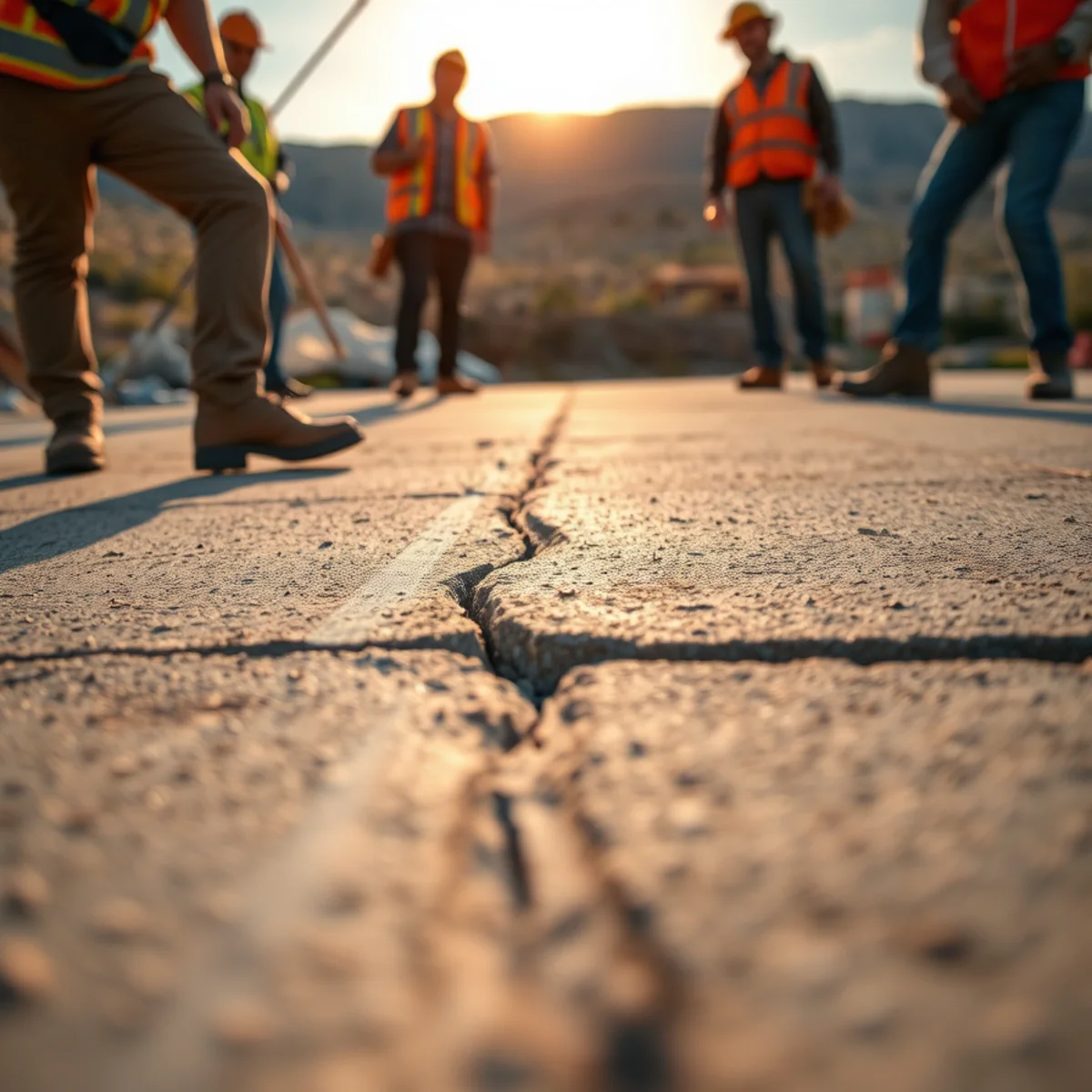 Local & Climate
Why Concrete Cracks in Southern Colorado — and When to Worry
Almost all concrete cracks — the question is which kind. Here is how to tell harmless shrinkage cracks from the ones that signal a real problem.
Read article