Sealing is the cheapest, easiest thing you can do to make a concrete driveway last longer — and in Colorado it is close to essential. Our freeze-thaw winters, deicing salt, and 300-plus days of high-desert sun all work on unprotected concrete, pulling water into the surface and prying it apart one cycle at a time.
A good sealer changes that. It keeps water and salt from soaking in, so the surface resists the scaling, flaking, and cracking that age a driveway early. This guide covers which sealer to use in our climate, how often to reapply it, exactly how to do the job, and the first-winter rule that saves a lot of new driveways.
Why sealing matters in Colorado
Concrete looks solid, but the surface is full of tiny pores. Water seeps in, freezes overnight, expands, and pushes flakes of concrete loose — the scaling and spalling you see on tired driveways. Add the deicing salt that comes off our roads and winter tires, and the damage speeds up. Sealing fills and coats those pores so water and salt bead up and run off instead of soaking in.
The payoff is real: a sealed driveway resists surface damage, cleans up more easily, and holds its color far longer under our relentless UV. It will not fix a slab that was poured wrong, but on sound concrete it is the single best maintenance habit you can keep.
Types of concrete sealer
Penetrating sealers (silane and siloxane)
For most Colorado driveways, a penetrating silane/siloxane sealer is the right choice. It soaks into the concrete and forms a water-repellent barrier from within. It does not change how the surface looks or feels, it will not get slippery, and it lets the slab breathe — which matters through freeze-thaw. It is the most durable option against water and salt, and it is what we recommend for exterior concrete driveways.
Topical sealers (acrylic and film-forming)
Topical sealers sit on top of the concrete as a thin film. Acrylics add a slight sheen and richen color, which makes them popular on decorative surfaces like exposed aggregate and stamped concrete. The trade-off is that they wear faster under traffic and UV, need reapplying more often, and can get slick when wet unless a non-slip additive is mixed in. For a plain driveway you want protection, not shine, so penetrating usually wins.
Let new concrete cure first
How often to seal in Colorado
Plan on resealing a driveway with a penetrating sealer every three to five years in our climate. Decorative surfaces finished with a topical acrylic wear faster and usually want fresh sealer every two to three years. Exact timing depends on sun exposure, traffic, and how much snowmelt and salt the driveway sees.
Here is a simple field test. Splash a little water on the driveway. If it beads up and sits on top, the sealer is still working. If it soaks in and darkens the concrete, it is time to reseal. Check once a year each spring and you will never be caught off guard.
How to seal a concrete driveway, step by step
- Pick a dry window. You want 24 to 48 hours of dry weather with temperatures roughly between 50°F and 90°F. Spring and fall are ideal in Pueblo — avoid sealing right before a hard freeze.
- Clean the surface completely. Sweep, then pressure wash to lift dirt, grime, and any old, failing sealer. Hit oil stains with a concrete degreaser. The slab must be clean and fully dry before you start.
- Make repairs first. Fill cracks and patch spalled spots, and let those cure. Sealing over damage just locks it in — handle real fixes with concrete repair before you seal.
- Choose the right product. For most driveways, use a penetrating silane/siloxane sealer. Read the label for coverage and cure times so you buy enough for two coats.
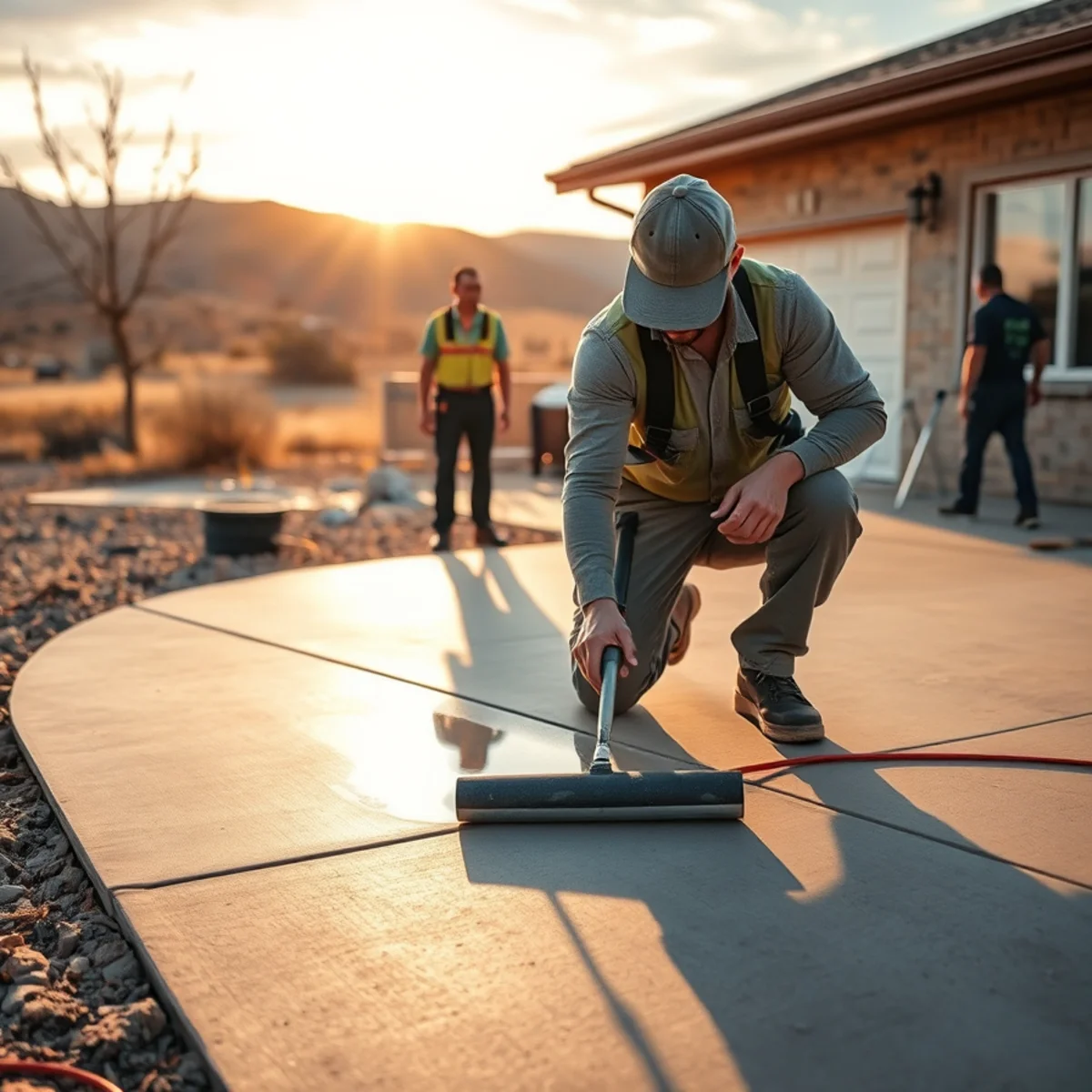
- Apply thin, even coats. Use a low-pressure sprayer and back-roll with a roller to spread it evenly. Two thin coats beat one heavy coat, and avoid puddling — extra sealer does not mean extra protection.
- Let it cure and stay off. Keep foot traffic off for the label's window, usually a few hours, and wait 24 to 48 hours before you park on it again.
Timing and weather
Weather makes or breaks a seal job. Seal on a dry day with no rain in the forecast for at least 24 hours, on a surface that is not blazing hot — direct midday sun in summer can flash-dry the sealer before it penetrates. Early morning or a mild, overcast day works well. And never seal a driveway that is still damp from snowmelt or a wash the night before.
The first-winter rule
New concrete is at its most vulnerable during its very first winter. The rule we give every customer: skip the deicing salt that first season. Use sand for traction instead, and shovel promptly. Combined with a penetrating sealer applied after the slab has cured, going salt-free the first winter gives your driveway the best possible start and heads off early scaling.
When to call a pro
Sealing a driveway is a manageable weekend job for a lot of homeowners. But if your slab is large, already scaling, or you would simply rather it be done right the first time, we are glad to handle it. M.A.M. Concrete seals new and existing driveways across Pueblo, Pueblo West, and Southern Colorado, and we can spot early trouble before it spreads. For a free estimate on sealing or driveway repair, call (833) 334-0468.
Frequently asked questions
Written by M.A.M. Concrete
A locally owned concrete contractor pouring driveways, patios, and foundations across Pueblo County & Southern Colorado. We write what we know from the job site.
Services mentioned in this article
Concrete Driveways
New driveways, replacements, and widening — poured with a 4,000 PSI air-entrained mix built for Pueblo freeze-thaw.
Learn moreExposed Aggregate
Exposed aggregate driveways and patios with natural stone texture, slip resistance, and freeze-thaw durability — poured for Pueblo.
Learn moreConcrete Repair
Concrete crack repair, spalling, and resurfacing in Pueblo — we fix the cause, not just the symptom, and tell you when to repair vs. replace.
Learn more