
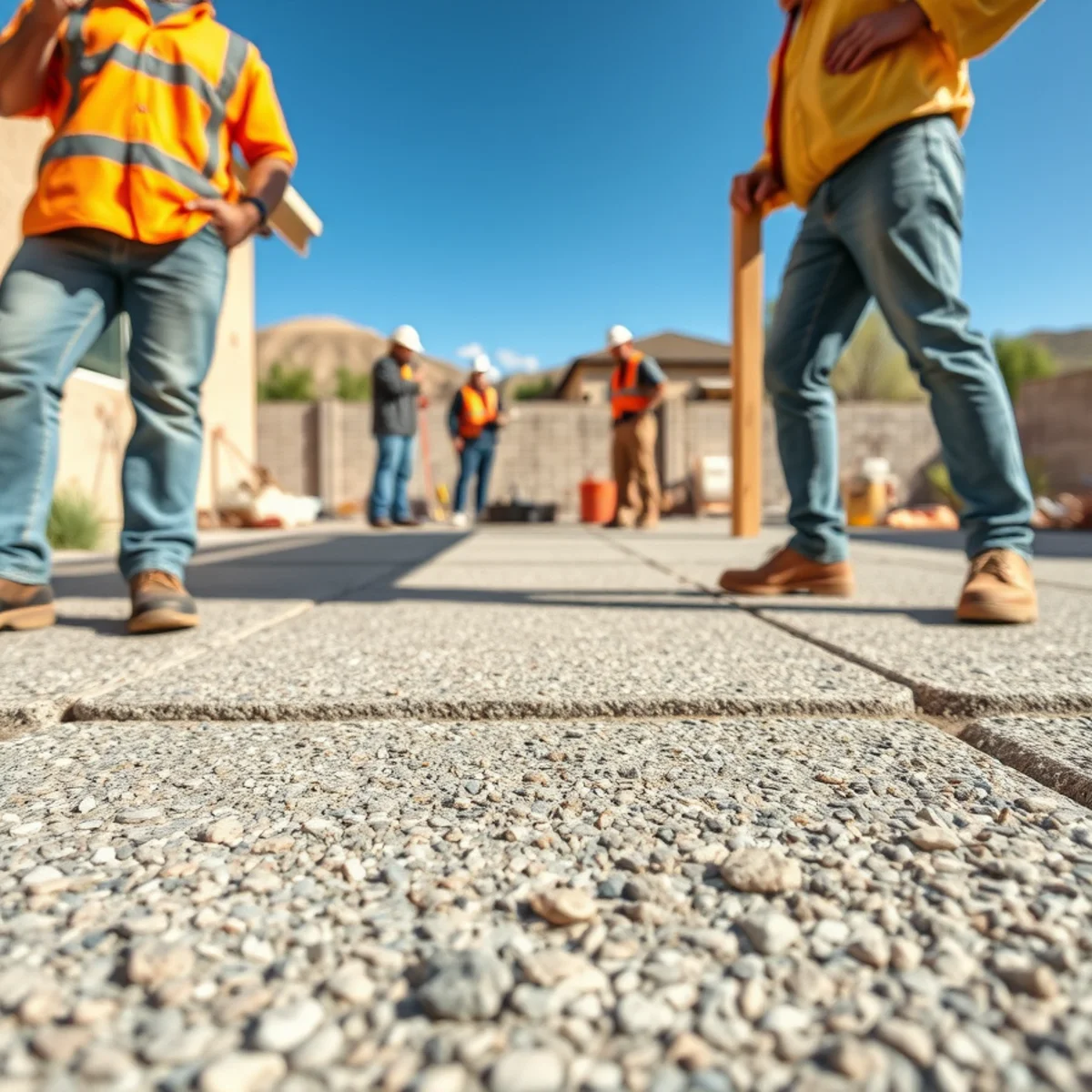
Exposed aggregate is one of the oldest decorative concrete finishes, and it has lasted for a simple reason — it looks like natural stone, hides everyday wear, and grips your feet when the surface is wet or icy. Instead of troweling the top smooth, we wash away the thin layer of surface paste to reveal the stone packed inside the concrete: river rock, quartz, granite, or a blend you pick. The pebbled texture that emerges becomes your finished driveway or patio.
For Pueblo, that texture earns its keep. The exposed stone resists the freeze-thaw scaling that flakes smooth slabs apart over our winters, and the natural grip makes it one of the safest surfaces you can pour around steps, entries, and pool decks. M.A.M. Concrete builds every exposed aggregate slab on the same footing as our other exterior work — a 4,000 PSI air-entrained mix over a compacted gravel base. The good looks sit on top of concrete engineered to hold up.
Why exposed aggregate holds up in Pueblo
Smooth concrete has one weak spot in our climate: the troweled surface. Water sits in tiny surface pores, freezes overnight, and pops the top layer off in flakes — the scaling you see on aging driveways every spring. Exposed aggregate sidesteps much of that. The wear surface is stone, not paste, so freeze-thaw and deicing salt have far less smooth cement to attack. Add the 4,000 PSI air-entrained mix underneath, and you get a decorative finish that ages gracefully instead of crumbling.
The grip matters just as much. Pueblo sees more than 300 days of sun, but north-facing walkways and shaded entries still ice over and stay slick for days. The rounded, textured surface of exposed aggregate gives boots and bare feet something to hold, which is why it is a favorite for front walks, patios, and anywhere water collects.
What you get with an exposed aggregate finish
- Natural stone look without the price or upkeep of laying real flagstone or pavers.
- Slip resistance that beats a smooth or lightly broomed finish, wet or dry.
- Freeze-thaw durability — the stone wear surface shrugs off surface scaling.
- Hides dirt and wear — the busy texture disguises tire marks, leaf stains, and minor chips.
- Design range — choose the stone color and size, from fine pea gravel to bold river rock, with optional banding.
How we pour and expose the aggregate
Exposed aggregate takes more skill than a standard pour — the timing of the wash is everything. Here is how your project runs:
- Free on-site estimate. We look at your drainage, soil, and layout, talk through stone options, and send a written quote.
- Base and forms. We excavate, compact a gravel base, set the slope so water drains away from your home, and form the slab.
- Pour the air-entrained mix. We place and screed the 4,000 PSI mix, then float it to bring a consistent layer of aggregate near the surface.
- Time the exposure. As the slab sets, we wash and brush away the thin top paste at exactly the right moment — too early washes out the rock, too late buries it.
- Clean and cure. We rinse the surface, sometimes with a light acid wash to brighten the stone, and cure the slab properly.
- Seal and walk-through. We apply a penetrating sealer, hand you a simple care sheet, and answer your questions before we pack up.
Seal it, then keep sealing it
What affects the cost of exposed aggregate
We won't quote a slab we haven't seen. What we can do is tell you what moves the number:
- Square footage and thickness — larger areas and thicker driveway pours use more material.
- Stone choice — standard gray aggregate costs less than premium quartz, granite, or seeded specialty stone.
- Design details — decorative borders, saw-cut patterns, or mixing in a stamped concrete band add labor.
- Site prep — removing an old slab, fixing drainage, or building up a poor base all factor in.
- Sealing — the type and number of sealer coats affects both the price and the finished sheen.
For a realistic ballpark on a decorative patio before we visit, our Pueblo concrete patio cost guide breaks down current ranges. We confirm your exact number on-site, for free.
Sealing and everyday upkeep
Exposed aggregate is low-maintenance, not no-maintenance. Rinse it with a hose when it gets dusty, sweep off leaves before they stain, and clear snow with a plastic shovel rather than a metal blade that can chip the surface. The one job you shouldn't skip is resealing every couple of years — a fresh coat keeps the stones bright, the surface locked, and freeze-thaw at bay. Our guide on sealing concrete in Colorado walks through the timing and products we trust.
Where exposed aggregate looks best
Exposed aggregate is a natural fit for concrete patios, front walkways, pool decks, and entries where slip resistance counts. It also makes a handsome, durable concrete driveway that stands out from every broom-finish slab on the block. If you love the stone look but want more color options, we can pair it with stained and colored concrete for a custom result.
Why Pueblo homeowners choose M.A.M. Concrete
We're locally owned, we answer the phone, and we treat the decorative finish as seriously as the concrete beneath it. You get a pre-pour walkthrough, honest advice on which stone and finish suit your project, and a crew that cleans up daily. Estimates are always free, veterans get a 10% discount, and we stand behind our work. From the Pueblo West subdivisions to older neighborhoods in town, we pour exposed aggregate that still turns heads years later.
Ready to talk about your exposed aggregate project?
Free on-site estimates across Pueblo County & Southern Colorado. Call (833) 334-0468 or request a quote — we'll take it from there.
Exposed Aggregate: frequently asked questions
Related Services
Stamped Concrete
The look of flagstone, slate, or wood-plank stone — poured as one durable slab, colored full-depth and sealed for Pueblo weather.
Learn moreStained & Colored Concrete
Stained and colored concrete for patios, floors, and driveways — acid stain, water-based stain, and integral color built for Pueblo sun.
Learn moreConcrete Patios
Broom, stamped, or exposed-aggregate patios poured for Pueblo's sun and freeze-thaw — with drainage that protects your home.
Learn moreHelpful Reading
 Cost Guides
Concrete Patio Cost in Pueblo: What Homeowners Should Expect
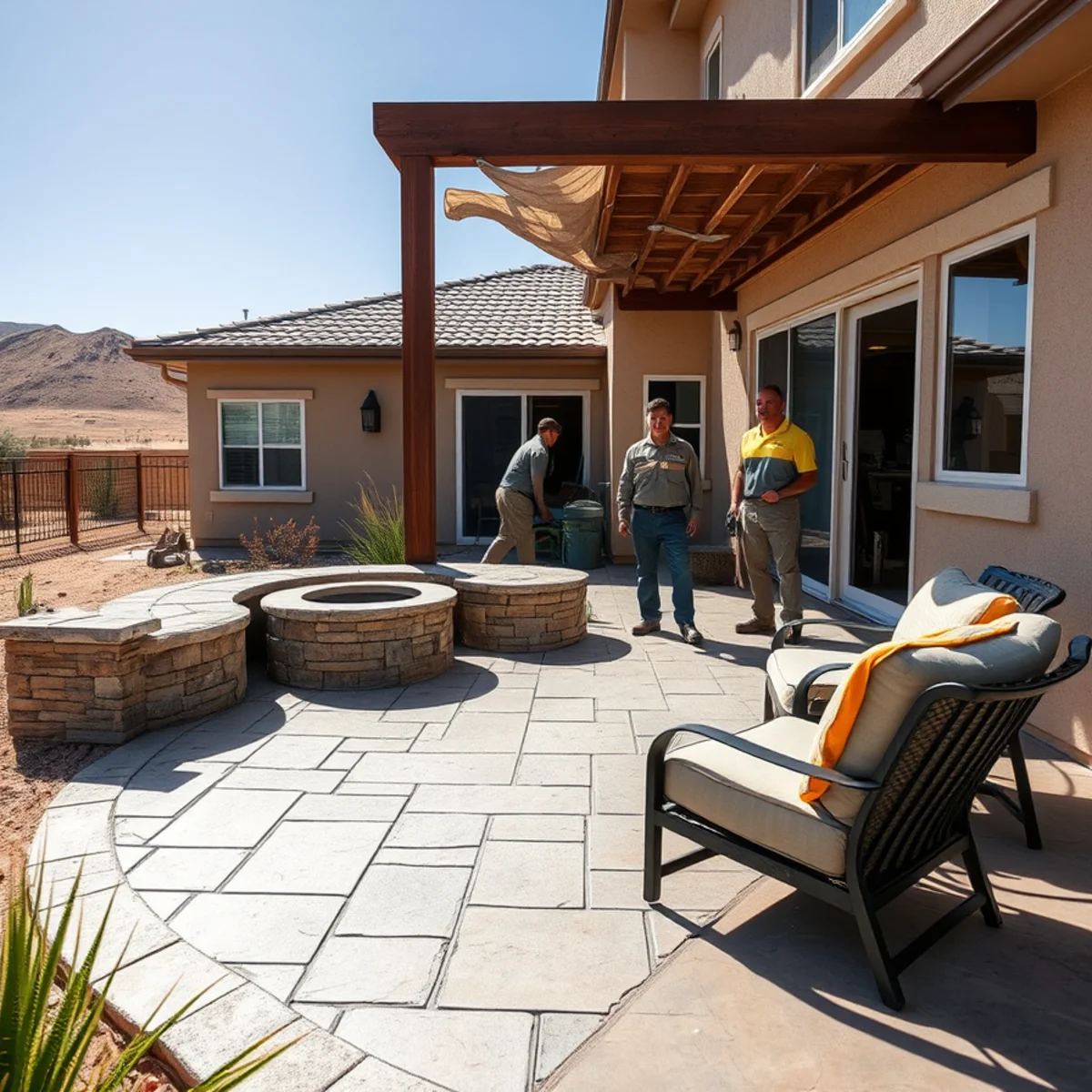
What a concrete patio costs in Pueblo, CO — price by size, plain vs. stamped vs. exposed aggregate, and how add-ons like fire pits add up.
Read article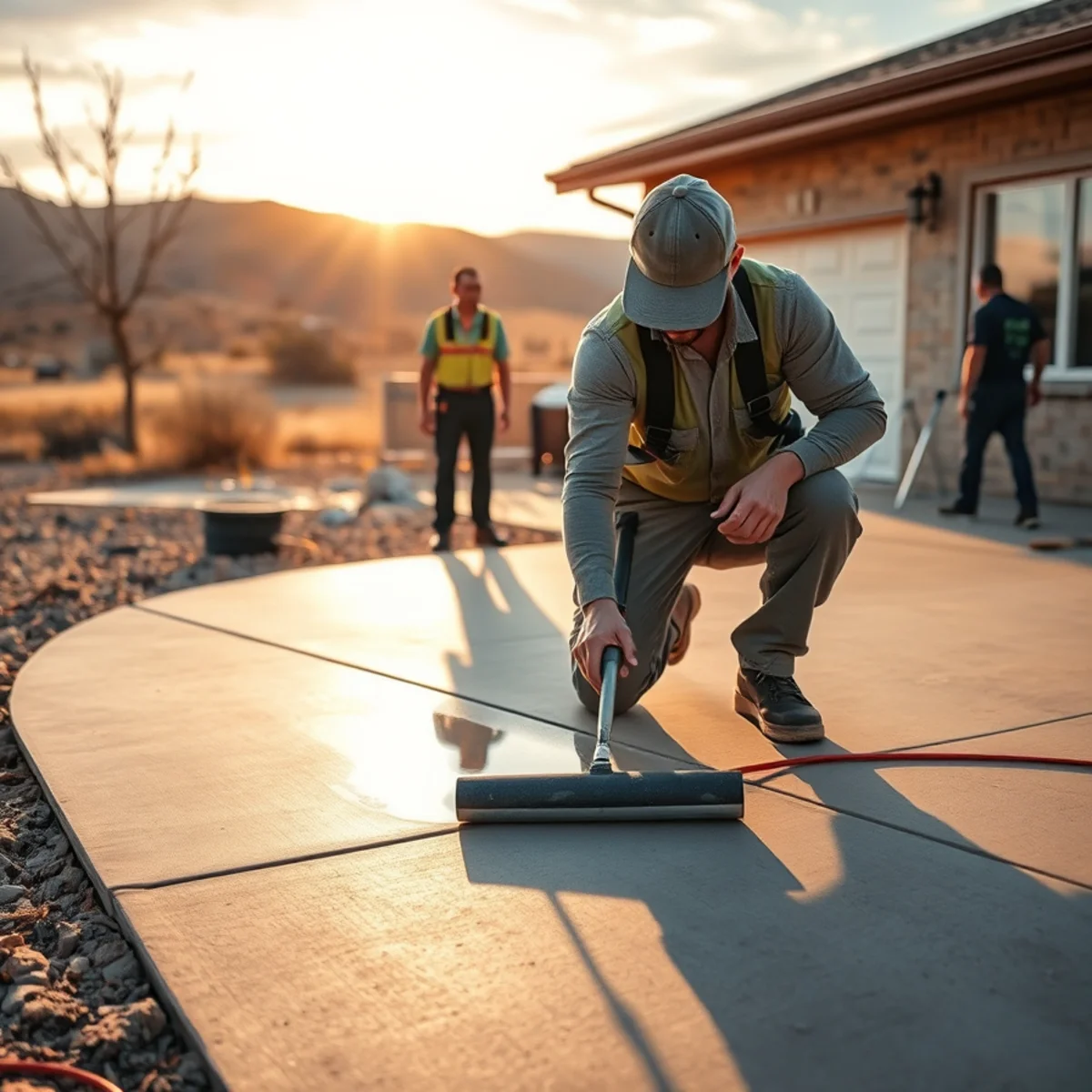 How-To & Maintenance
How to Seal a Concrete Driveway (and How Often in Colorado)
A step-by-step guide to sealing a concrete driveway in Colorado — which sealer to use, how often, and the first-winter rule that saves your slab.
Read article