
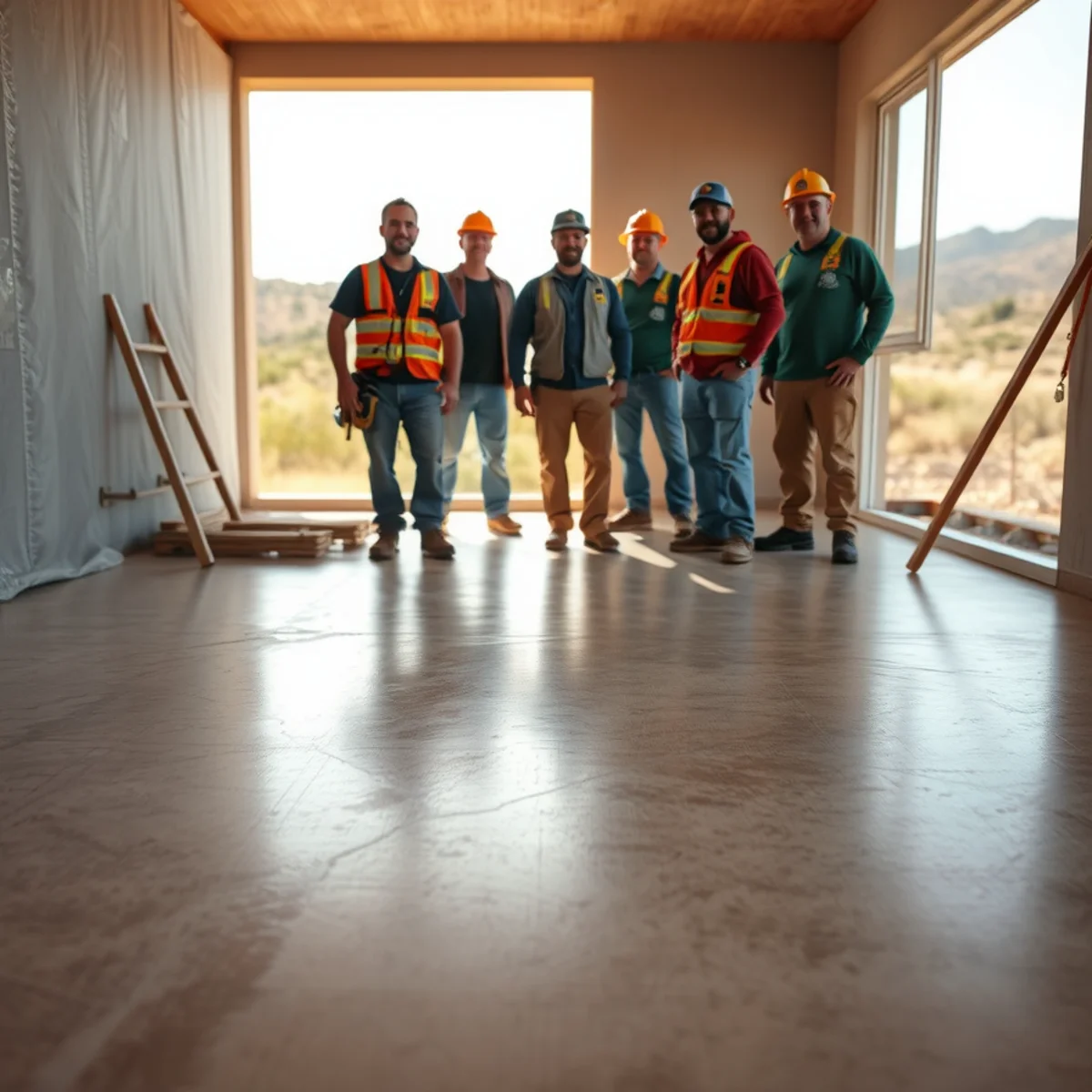
Color is what separates a concrete surface that reads as a slab from one that reads as a design choice. Stains and integral pigments turn plain gray concrete into warm earth tones, rich browns, slate grays, or custom blends that suit your home — indoors or out. Done right, the color becomes part of the concrete itself, not a coat of paint sitting on top waiting to peel.
M.A.M. Concrete colors concrete two proven ways: staining an existing or new slab, and mixing integral pigment right into the concrete before we pour. Which one fits depends on your surface, your look, and where it lives — a sun-baked patio has different needs than a basement floor. We walk you through the options in plain language and pour color that holds up to Pueblo's high-desert sun.
Two ways to add color: stain vs. integral
There is no single 'best' way to color concrete — it depends on the slab and the look you're after. Here is how the main methods compare.
Acid (reactive) stain
Acid stain reacts chemically with the lime in cured concrete to create mottled, variegated, stone-like color that no two slabs share. It soaks in and becomes permanent, so it won't peel or chip. The palette leans earthy — browns, ambers, tans, and blue-greens — and the marbled result is popular for patios, floors, and entryways where you want character rather than a flat, uniform tone.
Water-based stain
Water-based and acetone stains work more like a translucent dye, offering a far wider color range including grays, blues, and brighter hues. They are more predictable and uniform than acid stain, easier to control, and low-odor — a good choice for interior floors and for matching a specific color.
Integral color
Integral color mixes pigment into the concrete before it's poured, so the color runs all the way through the slab. Because it isn't just on the surface, a chip or scratch won't expose gray concrete underneath. It's the most durable option for exterior flatwork and pairs perfectly with stamped concrete, where we often combine an integral base color with a surface release color for depth.
Color that survives the Pueblo sun
Pueblo gets more than 300 days of sun a year, and high-desert UV is hard on color. Cheap pigments and dyes fade, chalk, or shift over a few summers. We use UV-stable, fade-resistant pigments rated for exterior use, and we lean on integral color and mineral-based stains outdoors because they hold up far better than surface dyes. Indoors, where UV is not a factor, we can open up the full color range with confidence.
Sealing is the other half of colorfastness. A quality sealer with UV inhibitors protects the color, deepens it, and shields the surface from freeze-thaw and deicing salt. We match the sealer sheen to your taste, from a natural matte to a wet-look gloss.
Not all 'colored concrete' is equal
Great uses for stained and colored concrete
- Patios and outdoor living areas — warm, custom color that complements your home and landscaping.
- Interior floors — polished, stained living rooms, kitchens, and basement floors that look high-end and clean easily.
- Garage floors — combine color with a garage floor coating for a durable, finished look.
- Driveways and walkways — integral color adds curb appeal that will not fade off the surface.
- Accent bands and borders — pair colors with exposed aggregate or stamped patterns for a custom design.
Our staining and coloring process
- Free on-site estimate. We look at your slab or plans, discuss color goals, and show you samples in daylight — color reads differently in the Pueblo sun than under a showroom light.
- Surface prep or mix design. For staining, we clean, degrease, and profile the slab so it takes color evenly. For integral color, we dose the pigment precisely into the mix.
- Test area. On stain jobs we test the color on an inconspicuous spot so you approve the real result before we commit the whole surface.
- Apply the color. We stain in controlled coats or place the integrally colored pour, working for even, natural results.
- Neutralize and clean. Acid stains are neutralized and rinsed so the sealer bonds properly.
- Seal and cure. We apply a UV-stable sealer, cure it, and hand you a care sheet for keeping the color rich for years.
Keeping the color rich
Colored concrete is easy to live with. Sweep or dust-mop interior floors, rinse exterior surfaces, and wipe spills before they sit. The key to long-lasting color is resealing on schedule — roughly every two to three years outdoors in our climate, less often indoors. Our guide on sealing concrete in Colorado covers the timing and products. Looking for design inspiration? Our roundup of stamped concrete patio ideas for Southern Colorado shows color and pattern combinations that work locally.
Why Pueblo homeowners choose M.A.M. Concrete
Color is where craftsmanship shows. We're locally owned, we test before we commit, and we use products built to survive our sun and winters — not the cheapest bucket on the shelf. You get honest guidance on stain versus integral color, a pre-pour or pre-stain walkthrough, free estimates, and a 10% veteran discount. We stand behind the finish, from the first sample to the final sealed surface.
Ready to talk about your stained & colored concrete project?
Free on-site estimates across Pueblo County & Southern Colorado. Call (833) 334-0468 or request a quote — we'll take it from there.
Stained & Colored Concrete: frequently asked questions
Related Services
Stamped Concrete
The look of flagstone, slate, or wood-plank stone — poured as one durable slab, colored full-depth and sealed for Pueblo weather.
Learn moreExposed Aggregate
Exposed aggregate driveways and patios with natural stone texture, slip resistance, and freeze-thaw durability — poured for Pueblo.
Learn moreConcrete Patios
Broom, stamped, or exposed-aggregate patios poured for Pueblo's sun and freeze-thaw — with drainage that protects your home.
Learn moreHelpful Reading
 How-To & Maintenance
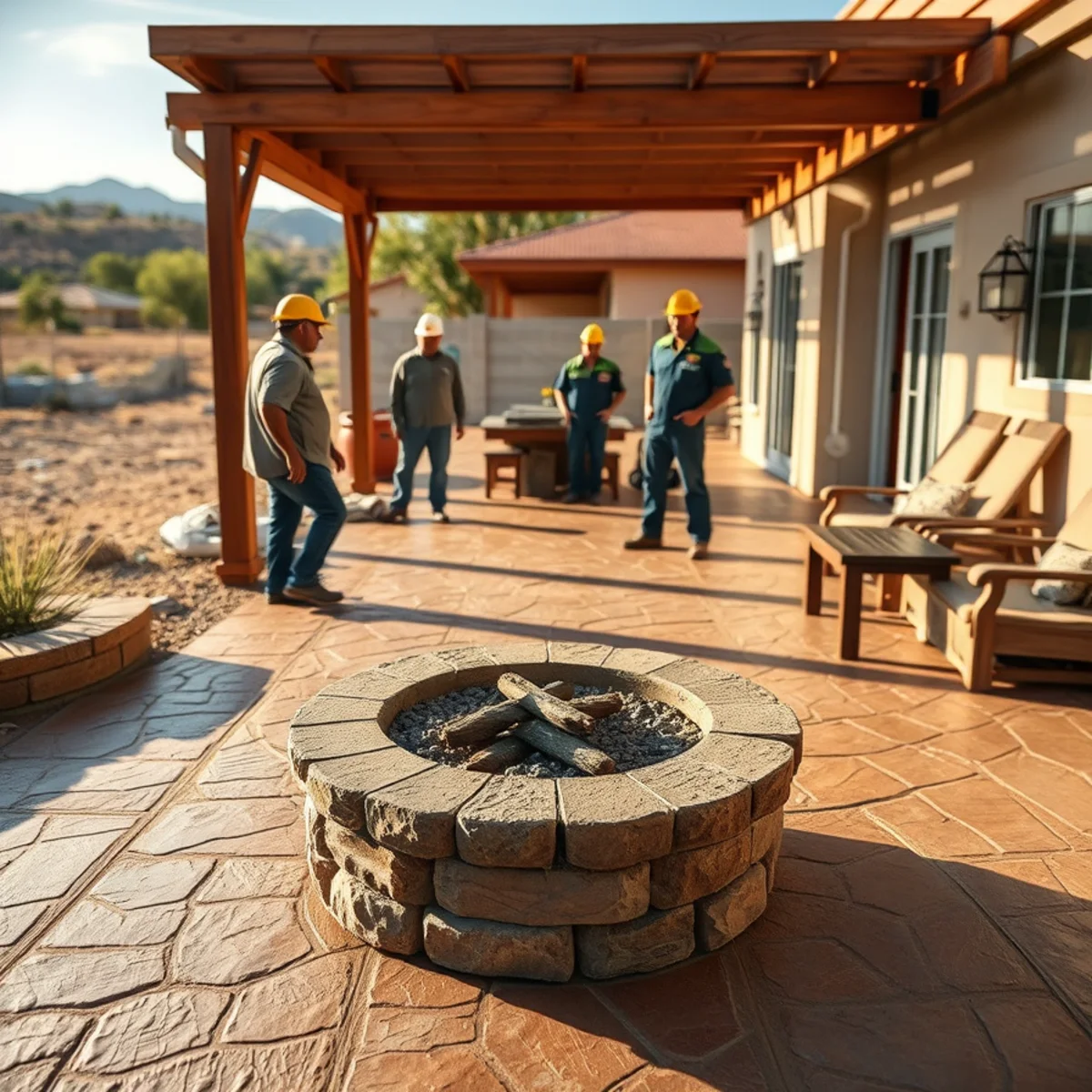
10 Stamped Concrete Patio Ideas for Southern Colorado Backyards
Ten stamped concrete patio ideas built for Southern Colorado backyards — patterns, earth-tone colors, borders, fire pits and pool decks.
Read article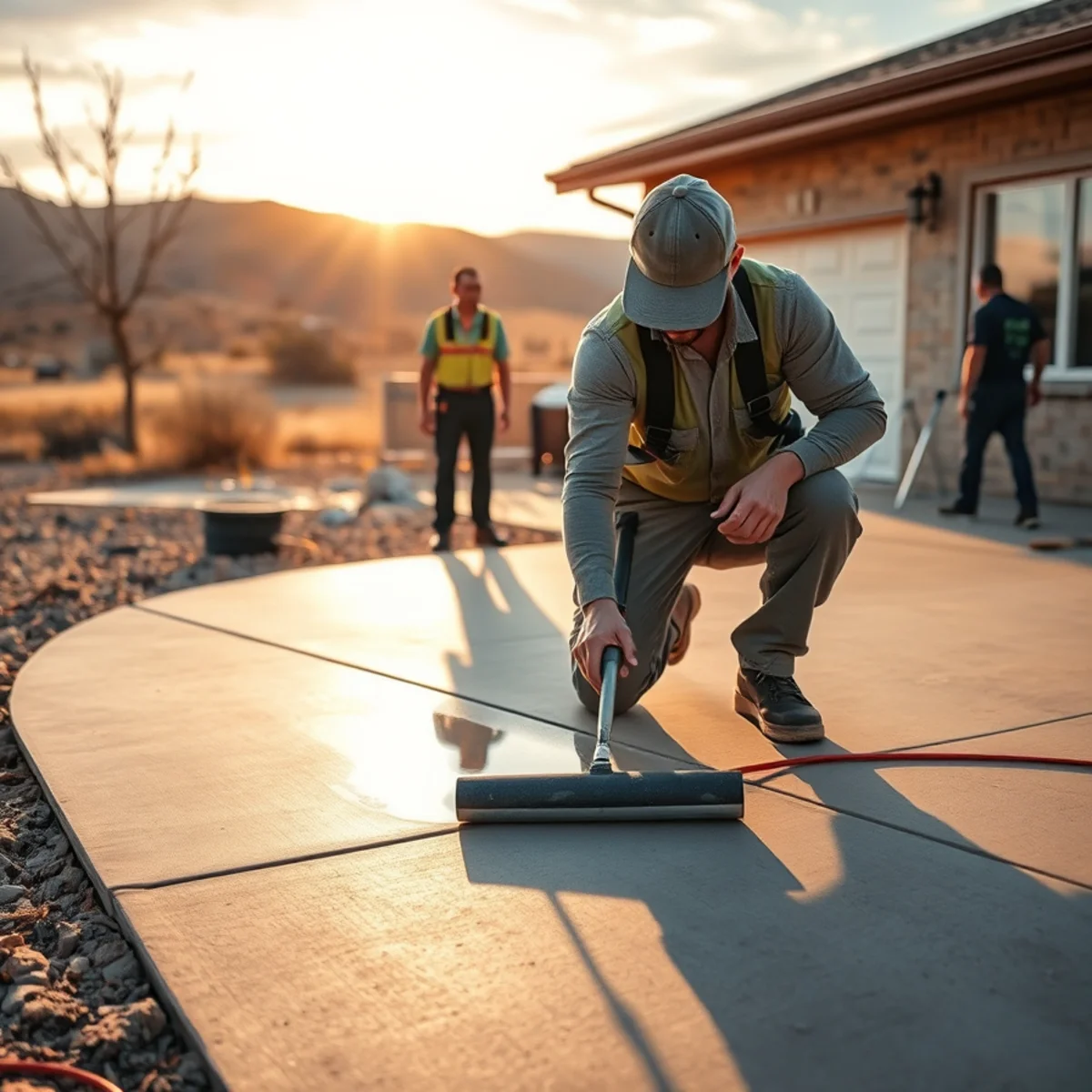 How-To & Maintenance
How to Seal a Concrete Driveway (and How Often in Colorado)
A step-by-step guide to sealing a concrete driveway in Colorado — which sealer to use, how often, and the first-winter rule that saves your slab.
Read article