A bag of ice melt keeps you from slipping on the way to the car — and quietly goes to work on your concrete. Every spring in Pueblo we get calls about driveways that flaked and pitted over the winter, and deicing salt is behind a lot of them. It's one of the most common ways homeowners shorten the life of good concrete without realizing it.
You don't have to choose between safe footing and a driveway that lasts. With a few simple habits — and one firm rule for new concrete — you can get through a Southern Colorado winter with both intact. Here's what salt actually does and how to stay ahead of it.
How deicing salt actually damages concrete
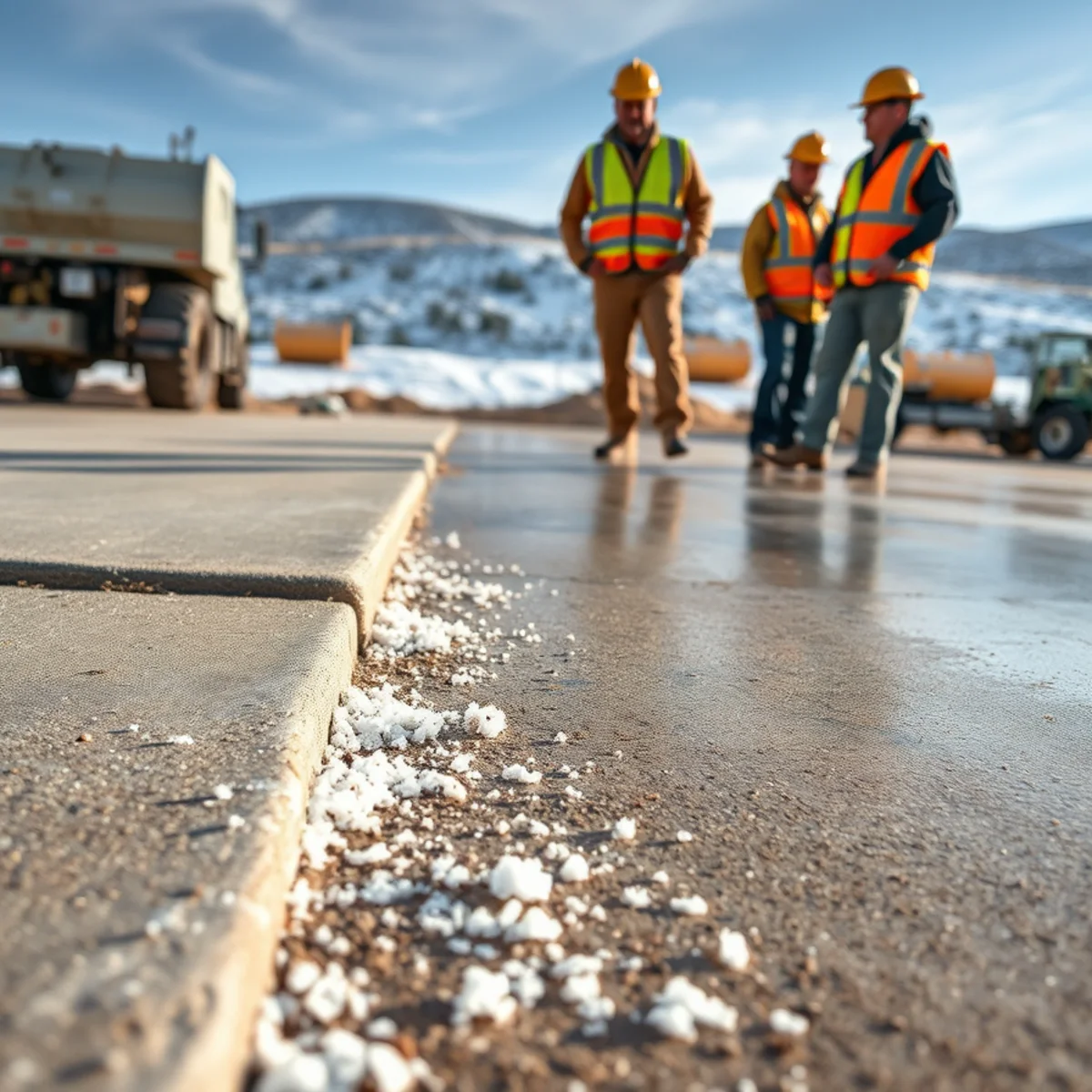
There's a common belief that salt chemically eats through concrete. That's mostly a myth — the bigger damage is physical. Salt lowers the freezing point of water, so a slab thaws and refreezes far more often than it would on its own. It also draws in and holds extra moisture. Put those together and you get more water sitting in the concrete and many more freeze-thaw cycles working on it. The result shows up as surface scaling: the top layer flaking, peeling, and shedding.
Salt does have chemical downsides too. Some products are harsher than others, and the chlorides in most deicers can reach steel reinforcement and corrode it over time — and rusting steel expands, popping chunks of concrete loose as spalling. So salt attacks on two fronts: it multiplies freeze-thaw stress at the surface and it goes after the reinforcement below.
Why new concrete is most at risk: the first-winter rule
Fresh concrete is the most vulnerable of all. A slab poured this year has not reached its full strength, and its surface and internal air-void system are still maturing. Hit it with salt in its first winter and you can scale a driveway before it ever had a chance to harden into its long life.
The rule is simple and worth following to the letter: no deicing salt on any new concrete through its first full winter. Use sand for traction instead. After that first season, concrete handles the occasional deicer far better — but easy does it is still the right approach in our climate.
The first-winter rule
Sand: traction without the chemistry
Plain sand is the concrete-friendly way to stay upright. It won't melt ice, but it gives your tires and boots something to grip, which is often all you actually need on a driveway or walkway. It's cheap, it's harmless to the slab, and you simply sweep it up once the weather breaks. For new concrete it's the clear choice, and for any concrete it's a good default before you reach for a deicer.
If you use a deicer, use it smart
Sometimes ice is thick enough that you do want to melt it. When that happens, a little care goes a long way:
- Never use it on first-winter concrete. No exceptions — reach for sand instead.
- Avoid fertilizer-based melters. Products containing ammonium sulfate or ammonium nitrate genuinely attack concrete chemically. Read the label and skip them.
- Use the least you can. Scatter only what you need to break the bond, then shovel the slush off rather than letting it pool and refreeze.
- Clear the melt. Don't let salty water sit on the slab or pile salted snow on it — that just keeps moisture and chloride in contact with the concrete.
- Go easy near reinforced or older concrete. Chlorides that reach steel cause the worst long-term damage.
Seal your concrete before winter
Your best physical defense against salt is a good penetrating sealer. It lines the pores so the concrete absorbs far less water and salt, which means fewer freeze-thaw cycles doing damage inside the slab. We seal new flatwork once it has cured and recommend resealing every two to three years, ideally heading into fall so you're protected before the first storm. Our guide to sealing a concrete driveway in Colorado covers the timing and products.
A sealer is real protection, not a license to over-salt. Think of it as one layer of a plan that also includes sand, restraint, and cleanup — together they keep a driveway looking sharp for decades. Salt is one half of the freeze-thaw problem, and our overview of how Pueblo's freeze-thaw cycles damage concrete ties the whole picture together.
Clean up salt in spring
Salt left on the surface keeps pulling in moisture long after the ice is gone. When the weather turns, sweep off any leftover sand and give the driveway and walkways a good rinse to flush residual salt out of the surface. During winter, clear slush promptly instead of letting a salty puddle sit and refreeze against the concrete. These are five-minute habits that pay off in years of extra life.
Repairing salt-scaled concrete
If salt has already left your slab flaking, act before it spreads. Caught early, light scaling can often be resurfaced and sealed — our concrete repair crew can save a lot of surfaces that look worse than they are. Once scaling is deep or widespread, replacement is the better value, and we rebuild concrete driveways and sidewalks and walkways with the air-entrained mix and sealer they need to shrug off future winters. We handle salt-damage repair and replacement across Pueblo, Pueblo West, and the surrounding area.
Protecting your driveway from salt mostly comes down to a bag of sand and a little restraint — and if the damage is already done, it's usually fixable. Want a professional eye on a scaling slab, or a new one poured to handle Pueblo winters? Estimates are always free, we offer a 10% veteran discount, and you'll get a straight answer. Call (833) 334-0468 to schedule your free on-site estimate.
Frequently asked questions
Written by M.A.M. Concrete
A locally owned concrete contractor pouring driveways, patios, and foundations across Pueblo County & Southern Colorado. We write what we know from the job site.
Services mentioned in this article
Concrete Repair
Concrete crack repair, spalling, and resurfacing in Pueblo — we fix the cause, not just the symptom, and tell you when to repair vs. replace.
Learn moreConcrete Driveways
New driveways, replacements, and widening — poured with a 4,000 PSI air-entrained mix built for Pueblo freeze-thaw.
Learn moreConcrete Sidewalks & Walkways
Level, slip-resistant front walks, garden paths & ADA routes — poured with control joints and drainage that beat trip hazards.
Learn more